In This Article
Understanding Toronto's UV Index
The UV index is a straightforward scale that tells you how strong the sun's ultraviolet radiation is on any given day. It runs from 1 (low) to 11+ (extreme), and in Toronto, it regularly hits 7 to 9 during June and July. That puts our city solidly in the "very high" category for several weeks each summer. On those days, unprotected skin can start to burn in as little as 15 minutes.
What catches many people off guard is that the UV index doesn't correlate perfectly with temperature. A breezy 24°C day at Woodbine Beach can carry the same UV intensity as a sweltering 34°C afternoon. Cloud cover reduces UV by only about 20 to 40 percent, which means you're still getting significant exposure on overcast days. Environment Canada publishes a daily UV forecast, and checking it before you head out can be just as useful as checking the rain forecast.
Peak UV hours in Toronto fall between 11 a.m. and 3 p.m. If your shadow is shorter than you are, the sun is at its most intense. That's a simple rule of thumb worth remembering, especially when you're out running errands or meeting friends for lunch on a patio. Understanding when you're most vulnerable is the first step toward building habits that actually stick.
How to Choose and Apply Sunscreen
The sunscreen aisle can feel overwhelming, but the basics are simpler than the marketing suggests. The Canadian Dermatology Association recommends a broad-spectrum sunscreen with an SPF of at least 30. "Broad-spectrum" means it protects against both UVA rays (which cause premature aging and contribute to cancer) and UVB rays (which cause sunburn). SPF 30 blocks about 97% of UVB rays. SPF 50 blocks about 98%. The jump from 30 to 50 is real but modest, so the best sunscreen is the one you'll actually wear consistently.
Chemical vs. Mineral Sunscreen
Chemical sunscreens absorb UV radiation and convert it to heat. They tend to feel lighter on the skin and blend in easily. Mineral (or physical) sunscreens contain zinc oxide or titanium dioxide and sit on top of the skin, reflecting UV rays away. Mineral formulas work well for people with sensitive skin or conditions like rosacea. Newer mineral formulations have largely solved the old "white cast" problem, especially for lighter skin tones, though some people with deeper skin tones may still prefer chemical options for cosmetic reasons.
How Much and How Often
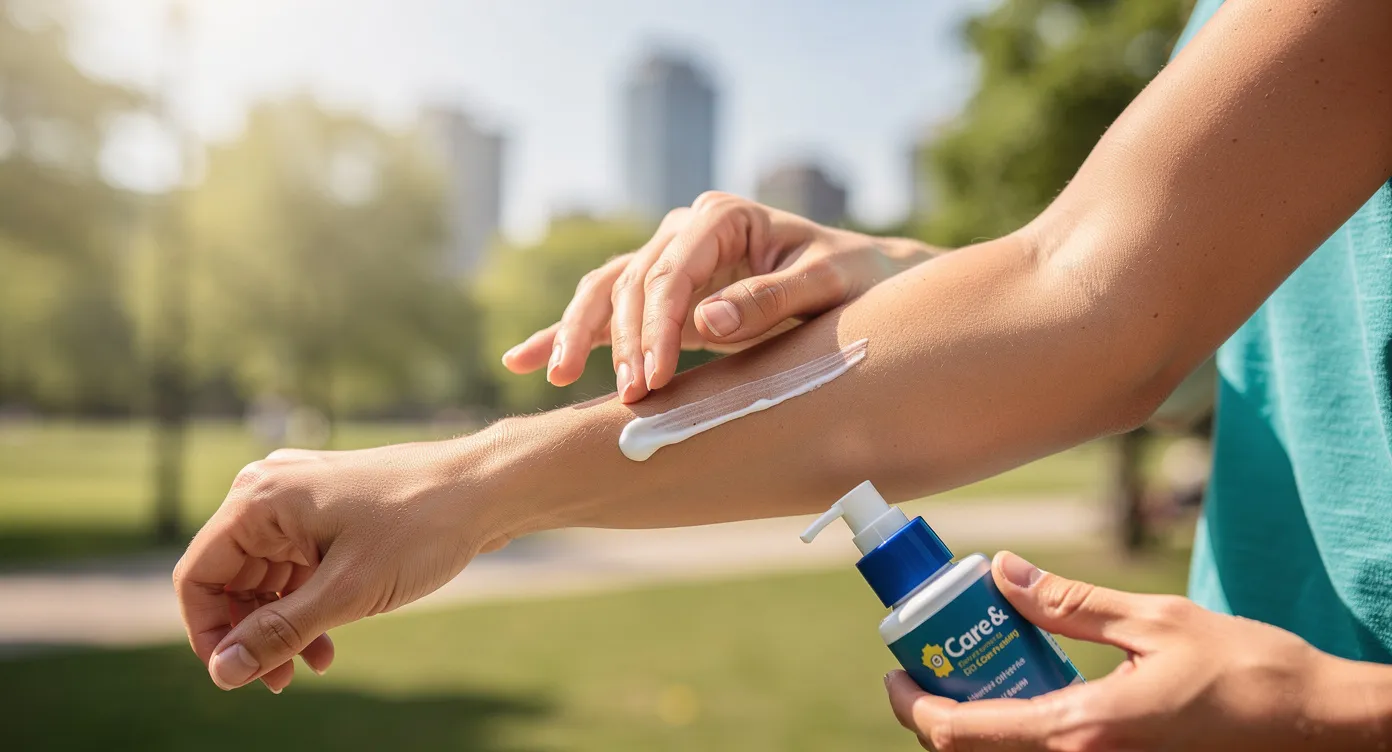
Most people apply far too little sunscreen. You need about a nickel-sized dollop for your face and roughly a shot glass worth (about 35 mL) for your entire body. Apply it 15 to 20 minutes before going outside, and reapply every two hours. If you're swimming or sweating, reapply immediately afterward, even if the bottle says "water-resistant." Water-resistant sunscreen maintains its SPF for about 40 to 80 minutes of water exposure, depending on the formula. It doesn't last indefinitely.
If you're pregnant, breastfeeding, or planning a pregnancy, mineral sunscreens are generally considered the safest choice. Your healthcare provider can help you pick a formula that works for your skin and your stage of life. The same careful approach applies to children. Pediatric sunscreen formulas are designed for more sensitive skin, and babies under six months should be kept out of direct sunlight altogether.
"The best sunscreen is the one you'll actually wear. Consistency matters far more than SPF number."
Sun Protection Beyond the Bottle
Sunscreen is essential, but it's only one layer of defence. If you rely on it exclusively, you're leaving yourself more exposed than you think. A well-rounded sun safety strategy involves clothing, timing, and a bit of planning.
A wide-brimmed hat protects your ears, nose, and the back of your neck. These are areas where skin cancers frequently develop, partly because people forget to apply sunscreen there. Sunglasses with UV 400 protection shield your eyes from cataracts and damage to the delicate skin around them. Lightweight, long-sleeved UPF-rated clothing has become much more stylish and breathable. You don't need to look like you're heading on a deep-sea fishing expedition to wear it.
Seeking shade during peak UV hours makes a meaningful difference. If you're at a park or festival, position yourself under trees or bring a canopy. Toronto's ravine trails offer naturally shaded routes for midday walks or runs. When you're planning a day at the Toronto Islands or a weekend in Muskoka, think about where the shade will be. A few minutes of forethought can save you a painful evening.
Certain medications can make your skin much more sensitive to the sun. Common examples include some antibiotics, diuretics, and retinoids. If you take daily medications, your Nurse Practitioner at Care& can review them and flag any that increase your photosensitivity risk. This is something that often comes up during chronic disease management appointments.
Skin Cancer Prevention and What to Watch For
Canada has one of the highest rates of skin cancer in the world, and melanoma rates have been rising for decades. The good news is that skin cancer is one of the most preventable cancers, and when caught early, it's also one of the most treatable. Prevention starts with the habits we've already covered. Detection starts with paying attention to your own skin.
The ABCDE rule is a simple framework for spotting suspicious moles or spots. Look for Asymmetry (one half doesn't match the other), Border irregularity (edges that are ragged or blurred), Colour variation (multiple shades of brown, black, red, or blue within one spot), Diameter larger than 6 mm (about the size of a pencil eraser), and Evolution (any change in size, shape, or colour over time). Not every suspicious spot is cancerous, but any mole that changes deserves a closer look from a healthcare provider.
Self-exams are worth doing every month or two, especially during the summer. Check your entire body, including your scalp, the soles of your feet, and between your toes. A partner can help you examine your back. If you have a lot of moles, fair skin, a history of blistering sunburns, or a family history of melanoma, you fall into a higher-risk category and should be especially vigilant. These are also factors your NP should know about during a preventive health visit.
Annual check-ups with your own NP, every year.
See Membership PricingTreating a Sunburn When Prevention Fails
Even with the best intentions, sunburns happen. Maybe you forgot to reapply after swimming, or the UV index was higher than you expected. A mild sunburn will feel hot and tender, turn pink or red, and usually heals within a few days. Here's how to manage it at home.
Cool (not cold) compresses or a lukewarm shower can take the sting out. Apply aloe vera gel or a fragrance-free moisturizer while the skin is still slightly damp to lock in hydration. Over-the-counter anti-inflammatory medications like ibuprofen can help reduce swelling and discomfort if taken early. Drink extra water. Sunburned skin draws fluid to the surface, which can leave you mildly dehydrated. Avoid popping any blisters that form. They're your body's natural bandage, and breaking them increases infection risk.
A more severe sunburn with widespread blistering, fever, chills, or nausea means your body is having a more significant inflammatory response. This can sometimes require professional assessment. Children with severe sunburns should be seen by a healthcare provider promptly, as they're more susceptible to dehydration and fluid imbalances. If you take other medications, your provider can help you choose pain relief options that won't cause interactions.
Care& Family Health members can book a visit with their Nurse Practitioner when a sunburn or skin concern doesn't feel right. Because you see the same NP every time, they already know your skin history and medication list. Learn more about how the membership works.
When to See Your Nurse Practitioner
Most sun safety is self-directed, but there are moments when it's smart to bring a professional into the picture. If you notice a mole that's changed shape, colour, or size, your NP can evaluate it and refer you to a dermatologist if needed. If you have risk factors like a family history of melanoma, a personal history of frequent sunburns, or very fair skin, a preventive skin conversation should be part of your annual health check.
You should also see your provider if you develop a sunburn with blistering that covers a large area, if you experience signs of heat stroke (confusion, rapid heartbeat, hot dry skin), or if a skin wound from sun damage isn't healing normally. These situations benefit from clinical assessment rather than home management alone.
Many Toronto residents don't have a family doctor right now. Ontario's provider shortage means that even when you want a preventive check, you might not be able to get one through the OHIP system in a timely way. Care& offers an alternative. As a family practice alternative, Care& members get unrushed appointments with a dedicated Nurse Practitioner who knows their history. The membership isn't covered by OHIP, but for people who want reliable access to preventive care, the annual membership provides that consistency. You can meet the NPs who'd be part of your care team before joining.
Frequently Asked Questions
Does sunscreen expire, and does it matter?
Yes. Most sunscreens are formulated to remain effective for about three years from the date of manufacture. Check the expiration date on the bottle. If the texture, colour, or smell has changed, replace it even if the date hasn't passed. Expired sunscreen may not provide the SPF protection listed on the label.
Can I get enough vitamin D if I always wear sunscreen?
In practice, yes. No one applies sunscreen perfectly or to every square centimetre of skin, so some UV always gets through. Most Canadians benefit from a vitamin D supplement during the fall and winter months regardless of their summer habits. Your healthcare provider can check your vitamin D levels with a simple blood test and recommend a dose that makes sense for you.
Is a base tan protective against sunburn?
A base tan provides roughly the equivalent of SPF 3 to 4, which is negligible protection. More importantly, any tan is evidence that UV radiation has damaged your skin cells' DNA. There's no such thing as a "healthy tan" from a skin cancer prevention standpoint. The only safe glow comes from a bottle of self-tanner.
How often should I get a check-up if I don't have a family doctor?
Health Canada and most provincial guidelines recommend an annual preventive health visit for adults, with more frequent visits if you have ongoing health conditions or specific risk factors. If you don't have a family doctor, Care& Family Health memberships give you a dedicated Nurse Practitioner for regular check-ups, skin assessments, lab work, and ongoing preventive care. It's not covered by OHIP, but the membership ensures you aren't going years between appointments.
Ready to prioritize your health?
Book an appointment with our experienced Nurse Practitioners today.
Book AppointmentOr call us at (647) 951-4770