The ABCDE Method: Your Five-Point Mole Check
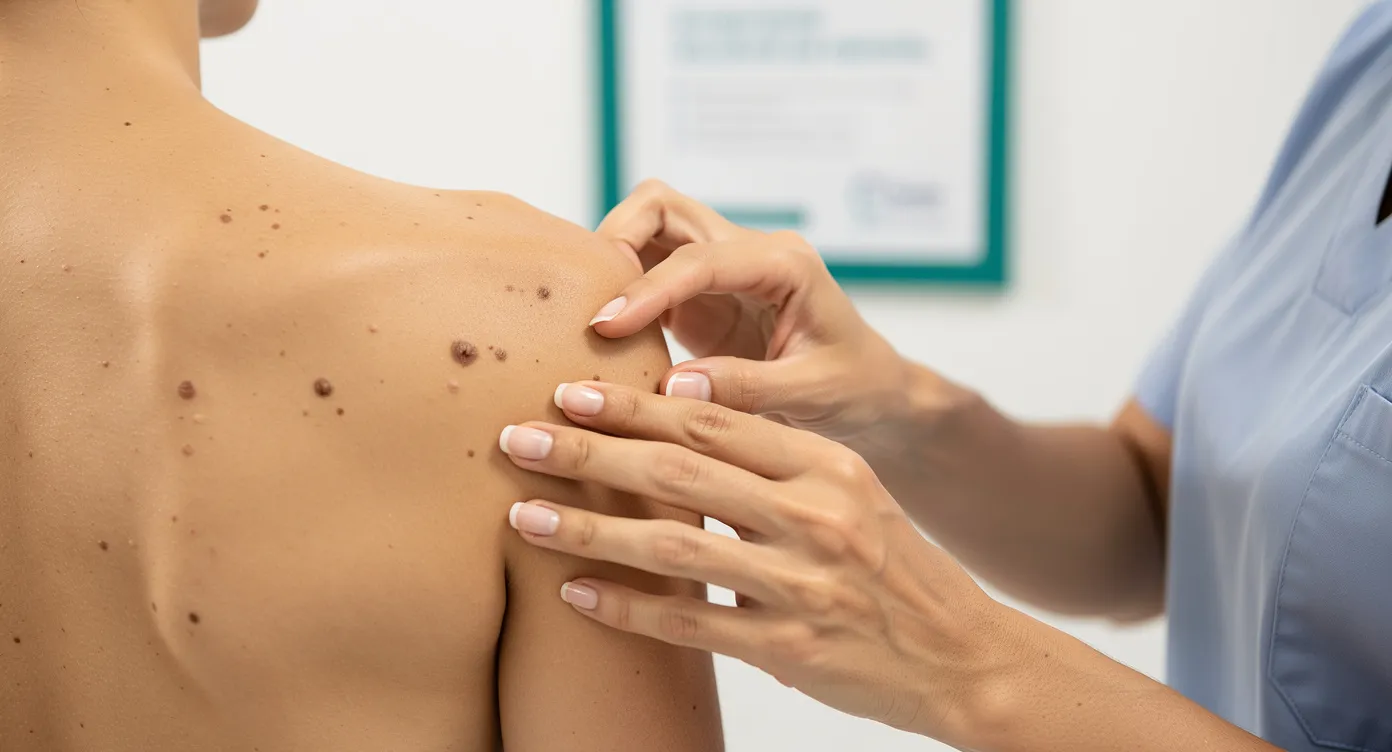
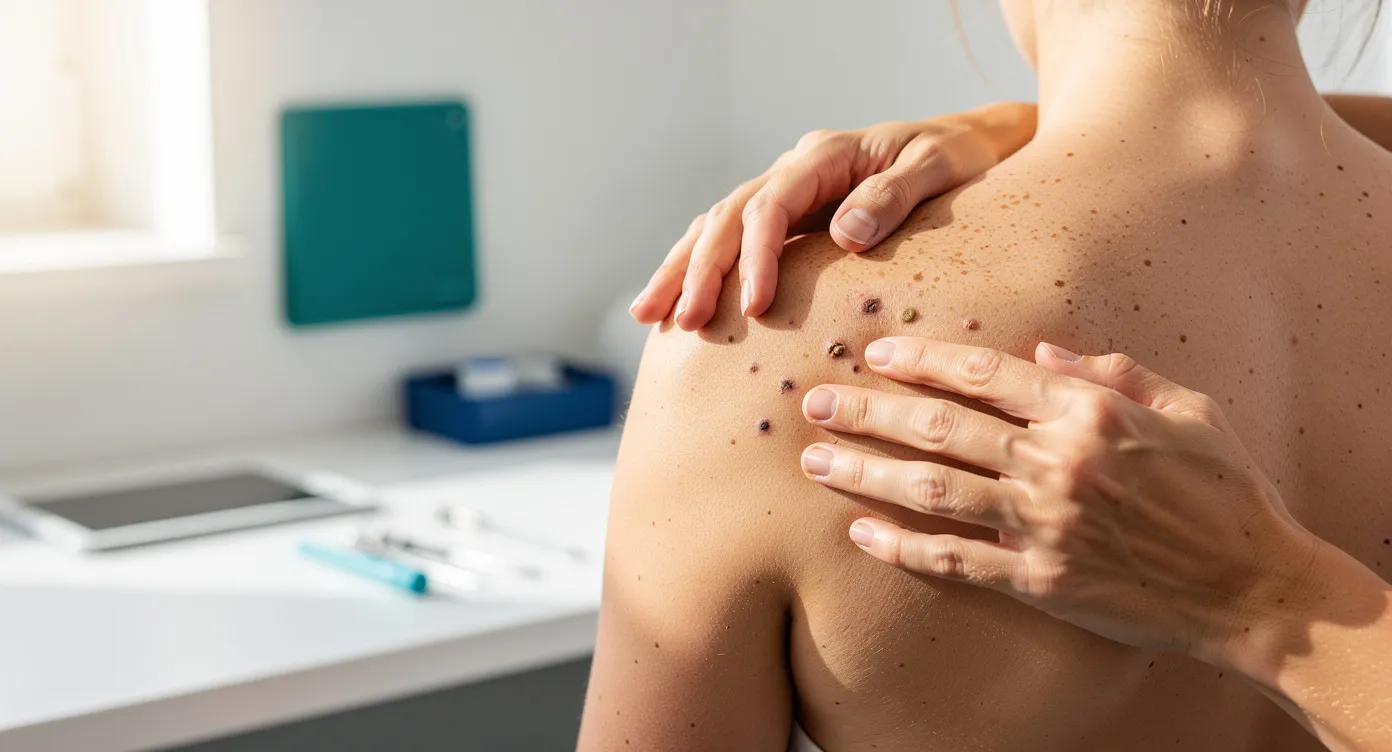
The ABCDE acronym was developed by dermatologists to give everyday people a quick framework for evaluating suspicious moles. Each letter represents a specific warning sign of melanoma, the most dangerous form of skin cancer. You don't need special tools. You just need good lighting and a mirror.
A is for Asymmetry. Draw an imaginary line through the centre of the mole. If the two halves don't match, that's asymmetry. Most benign moles are roughly symmetrical. Melanomas tend to grow unevenly, so one half may look noticeably different from the other in shape, colour, or thickness.
B is for Border. A harmless mole usually has smooth, well-defined edges. If the border is irregular, scalloped, blurred, or fading into the surrounding skin, that's worth noting. Ragged borders suggest the pigment cells are spreading in an uncontrolled way.
C is for Colour. Benign moles are typically a single, uniform shade of brown. A mole that contains multiple colours is more suspicious. Watch for patches of tan, dark brown, black, red, blue, or white within the same lesion. The more varied the colour, the more attention it needs.
D is for Diameter. Melanomas are often larger than 6 millimetres at the time of diagnosis. That's roughly the size of a pencil eraser. Smaller moles can still be melanoma, but a mole that's larger than this threshold deserves professional assessment. This is also why tracking size over time matters so much.
E is for Evolving. This might be the most important letter of all. Any mole that is changing in size, shape, colour, or texture over weeks or months should be evaluated. New symptoms like itching, bleeding, or crusting also fall under "evolving." A mole that looked fine a year ago but looks different today is telling you something.
If even one of these criteria applies to a mole on your body, it doesn't automatically mean you have melanoma. But it does mean you should have your Nurse Practitioner take a closer look. Early melanoma is highly treatable. Late melanoma is not. The ABCDE check takes less than a minute, and it could genuinely save your life.
How to Do a Full Skin Self-Check at Home
Knowing the ABCDE criteria is only useful if you're actually looking at your skin regularly. A thorough self-check once a month is what most medical guidelines recommend. Pick a day that's easy to remember. The first of the month, or whatever works for your routine. Then follow a consistent pattern so you don't miss anything.
Start with your face, ears, and scalp. Use a hand mirror or ask a partner to help check the areas you can't see yourself. Move to your neck, chest, and abdomen. Lift your arms and check your underarms and both sides of each arm, including your palms and the spaces between your fingers. Then check your legs, the tops and bottoms of your feet, and between your toes. Finally, use a full-length mirror and a hand mirror together to examine your back, buttocks, and the back of your neck.
Take photos of any moles you want to track and store them in a folder on your phone with the date. When you're looking at a mole six months from now, your memory alone won't be reliable enough to know whether it's changed. A photo comparison makes the "E" in ABCDE much easier to evaluate. If you're a Care& member, you can share these photos with your NP through the Care& app during your appointment so they're part of your health record.
Care& members see the same Nurse Practitioner at every visit, which means your provider already knows your skin history, your risk factors, and which moles you've been tracking. That continuity makes it much easier to spot subtle changes over time. You can meet our NPs to learn more about who you'd be working with.
Who Needs to Be Most Vigilant
Anyone can develop melanoma, but certain risk factors raise your odds significantly. If you have fair skin that burns easily, a history of blistering sunburns (especially before age 18), or a large number of moles (50 or more), you're in a higher-risk group. A family history of melanoma also increases your risk, as does regular use of tanning beds. Toronto's summers may be short, but UV exposure during June through September is intense enough to cause real damage, particularly during the midday hours.
People with darker skin tones can and do get melanoma, though it's less common. When it does occur, it's more often found in areas that don't get much sun exposure. The palms, soles of the feet, and under the nails. These areas are also easy to overlook during a self-check, which is part of why melanoma in darker skin is more likely to be diagnosed at a later stage. Everyone benefits from the ABCDE method regardless of skin tone.
If you have risk factors for skin cancer, your provider may want to see you for a skin assessment as part of your regular preventive care. At Care& Family Health, this kind of proactive screening fits naturally into ongoing family practice visits. Your NP can evaluate suspicious spots and refer you to a dermatologist if a biopsy or more specialized assessment is needed.
Annual check-ups with your own NP, every year.
See Membership PricingIf a mole is actively bleeding, rapidly growing, or has appeared suddenly and looks very dark or multicoloured, don't wait for your next routine appointment. Contact your healthcare provider as soon as possible for an urgent assessment. Melanoma caught early has a five-year survival rate above 99%. Melanoma caught late is far more difficult to treat.
When to See Your Nurse Practitioner
You should book a skin assessment any time you notice a mole that meets one or more of the ABCDE criteria, or any time a spot on your skin is new, unusual, or changing. Don't wait until your next annual check-up if something is concerning you right now. Your NP can perform a clinical evaluation and, if needed, arrange a referral to a dermatologist for biopsy or further testing.
If you don't currently have a family healthcare provider in Toronto, you're not alone. Many Ontarians are in the same position. While OHIP-covered options exist, wait times for referrals and specialist appointments can be long. At Care& Family Health, membership gives you a dedicated Nurse Practitioner who knows your history and can follow up on concerning moles visit after visit. It's not covered by OHIP. The membership is $450+HST per year for unlimited visits. But for something like melanoma screening, where early detection depends on a provider who knows what your skin looked like last time, that continuity can make a real difference.
Skin checks are also a great reason to bring your children in for a preventive visit. Pediatric skin assessment may differ from adult screening, and your NP can guide you on what to watch for at different ages. If you're managing other ongoing health conditions, your provider can incorporate skin checks into your chronic disease management plan so nothing falls through the cracks.
Frequently Asked Questions
Can a mole that passes all five ABCDE criteria still be melanoma?
Yes, though it's uncommon. Some melanomas, particularly nodular melanomas, can appear as small, symmetrical, evenly coloured bumps that don't fit the classic ABCDE pattern. The "E" criterion is your safety net here. Any new or changing skin lesion that looks different from your other moles should be evaluated by a healthcare provider, even if it doesn't check the other boxes.
Is sunscreen enough to prevent melanoma?
Sunscreen significantly reduces your risk, but it's not a guarantee on its own. Broad-spectrum SPF 30 or higher, reapplied every two hours and after swimming or sweating, is the current recommendation. Combine it with protective clothing, shade during peak UV hours (10 a.m. to 4 p.m.), and avoidance of tanning beds for the strongest protection. No single measure is foolproof, which is why regular self-checks and professional skin assessments matter.
How often should I get a check-up if I don't have a family doctor?
Most adults should have a general health assessment at least once a year, and more often if you have risk factors for skin cancer or other conditions. If you're without a regular provider in Toronto, Care& Family Health offers a membership model that gives you a dedicated Nurse Practitioner for all your preventive care needs, including annual skin checks. You can learn more about how it works and whether it's the right fit for you.
Ready to prioritize your health?
Book an appointment with our experienced Nurse Practitioners today.
Book AppointmentOr call us at (647) 951-4770