In This Article
Why Skin Changes Are So Easy to Put Off
Skin concerns are one of the most commonly delayed reasons for a healthcare visit. It makes sense when you think about it. A mole doesn't cause pain. A rash might come and go. A new spot feels like something you can keep an eye on. Life in Toronto is busy, and "that thing on my arm" rarely feels urgent enough to block off time for an appointment. But the trouble with skin changes is that the most serious ones are often the least dramatic-looking in their early stages.
Melanoma, the most dangerous form of skin cancer, can start as a small flat spot that barely stands out. Basal cell carcinoma sometimes looks like a minor pimple that doesn't heal. And certain rashes can be early signs of autoimmune conditions or infections that benefit from prompt treatment. The pattern we see at Care& Family Health is consistent: people come in saying, "I've been meaning to get this looked at for months." That delay is understandable, but it doesn't have to happen. When you have a dedicated provider who knows your health history, bringing up a skin concern can be as simple as mentioning it during a routine visit.
Suspicious Moles and the ABCDE Rule
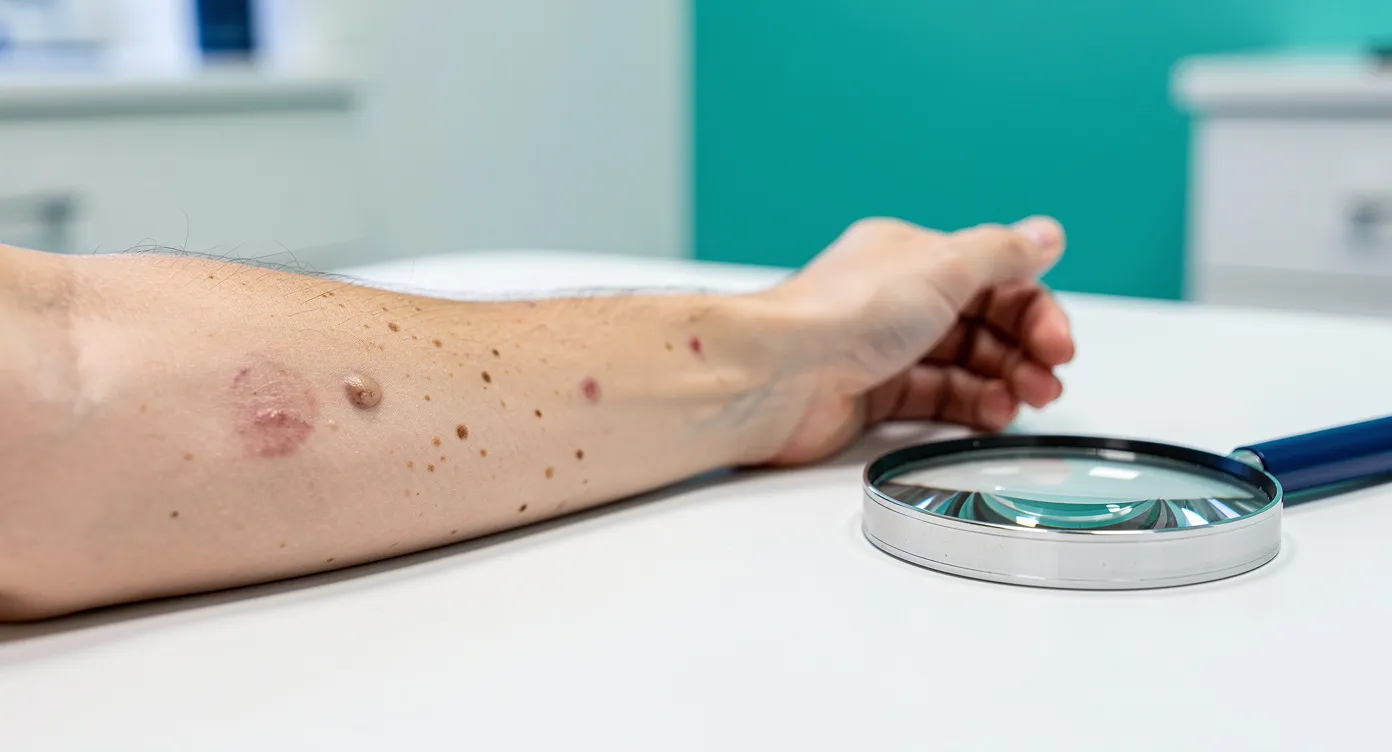
Most adults have between 10 and 40 moles, and the vast majority are completely benign. Your body creates moles when pigment-producing cells called melanocytes cluster together, and new ones can continue to appear well into your 40s. So having moles isn't a concern on its own. What matters is recognizing when a mole starts behaving differently from the rest.
The clinical standard for evaluating suspicious moles is the ABCDE rule, which gives you a practical framework for self-checks at home. Each letter stands for a feature that can signal a mole worth investigating further.
A is for Asymmetry
If you draw an imaginary line through the middle of a normal mole, the two halves should roughly match. When one half looks noticeably different from the other in shape, size, or colour, that asymmetry is worth noting.
B is for Border
Benign moles usually have smooth, even edges. A mole with borders that are ragged, blurred, or notched deserves closer attention. Some people describe it as looking like the edges are "bleeding" into the surrounding skin.
C is for Colour
Most normal moles are a single shade of brown. A mole that contains multiple colours, such as different shades of brown, black, tan, or patches of red, white, or blue, should be assessed by a healthcare provider.
D is for Diameter
Moles larger than 6 millimetres (roughly the size of a pencil eraser) warrant evaluation. That said, melanomas can be smaller than this when first detected. Size alone isn't the deciding factor, but it's one piece of the picture.
E is for Evolving
This is arguably the most important criterion. Any mole that is changing in size, shape, colour, or texture over weeks or months deserves a clinical assessment. A mole that has started itching, bleeding, or crusting also falls into this category.
"The most important letter in the ABCDE rule is E. A mole that's evolving. changing shape, colour, size, or texture over time. is always worth getting checked."
You don't need to memorize every detail of this framework. The takeaway is simple: if a mole looks different from your other moles (the "ugly duckling" sign) or if it's changed recently, bring it up with your provider. Taking a photo on your phone with a ruler or coin for size reference can help track changes over time and gives your Nurse Practitioner a useful comparison at your visit.
Rashes That Won't Go Away
A rash that appears and fades within a few days is usually a minor irritation or allergic reaction and doesn't typically require medical attention. But a rash that persists for more than two weeks, keeps recurring, or is spreading to new areas of your body is telling you something that's worth investigating.
Common Rashes That Need Assessment
Contact dermatitis, eczema flares, and fungal infections are among the most frequent rash-related concerns we see in Family Practice. These are rarely dangerous but can significantly affect your quality of life. Eczema, for instance, often worsens during Toronto's dry winter months and can lead to secondary skin infections if the barrier is broken from scratching. A provider can help you identify triggers and build a management plan that actually works.
Psoriasis is another condition that often gets mistaken for dry skin or a stubborn rash. It typically appears as thick, red, scaly patches on the elbows, knees, scalp, or lower back. Because psoriasis is linked to systemic inflammation and can be associated with joint problems, early identification matters for long-term health. If you've been diagnosed with psoriasis or a related condition, ongoing monitoring through Chronic Disease Management can help you stay ahead of flares and complications.
Rashes That Need Prompt Attention
Some rashes signal something more urgent. Shingles, caused by reactivation of the chickenpox virus, presents as a painful blistering rash along one side of the body. Starting antiviral medication within 72 hours of the rash appearing significantly reduces pain and the risk of lasting nerve damage. If you're over 50 and develop a burning, tingling sensation on one side of your torso followed by blisters, don't wait to get seen.
A new rash accompanied by fever, joint pain, or general feeling of unwellness can sometimes indicate a systemic condition. Lupus, for example, may present with a characteristic butterfly-shaped rash across the cheeks and nose. Lyme disease can produce a bullseye-shaped rash at the site of a tick bite. These associations don't mean every rash is serious, but they're good reasons to seek an assessment if a rash comes with other symptoms.
A rash that spreads rapidly, involves swelling of the lips, tongue, or throat, or is accompanied by difficulty breathing could signal a severe allergic reaction (anaphylaxis). If you carry an epinephrine auto-injector (EpiPen), use it immediately and then call 911. A rash with a high fever, spreading redness, warmth, and red streaking from the area may indicate a serious skin infection requiring emergency assessment.
New Bumps, Growths, and Skin Lesions
Not every new bump is a mole. Your skin can develop a wide variety of growths over time, most of which are benign. Seborrheic keratoses, for example, are extremely common in adults over 40 and look like waxy, stuck-on brown spots. Skin tags tend to appear in areas of friction like the neck, armpits, and under the breasts. Cherry angiomas are small, bright red dots caused by clusters of blood vessels. None of these require treatment unless they're bothersome.
The growths that do need assessment share a few common features. A bump that grows steadily over weeks, a sore or lesion that doesn't heal within three to four weeks, or a spot that bleeds repeatedly without clear cause are all worth bringing to your provider. Basal cell carcinoma, the most common skin cancer, often appears as a pearly or translucent bump, sometimes with visible blood vessels. Squamous cell carcinoma may look like a rough, scaly patch, a firm red nodule, or an open sore that crusts over and reopens.
If you're noticing new skin changes and you take medications that suppress the immune system, or if you have a history of significant sun exposure or tanning bed use, your risk for skin cancers is higher. This doesn't mean you should panic, but it does mean you should be proactive about getting new or changing skin lesions assessed.
If you're pregnant, breastfeeding, or planning a pregnancy, certain skin changes are expected due to hormonal shifts. Darkening of existing moles, the development of a linea nigra (a dark line on the abdomen), and skin tags are all common. However, the ABCDE criteria still apply. Any mole that meets those suspicious criteria should be assessed regardless of pregnancy status. Check with your provider before using any topical treatments during pregnancy or while breastfeeding.
For parents monitoring their children's skin, pediatric skin concerns can differ significantly from adult presentations. Children can develop moles, and while childhood melanoma is rare, any rapidly changing or unusual-looking mole on a child should be evaluated by a healthcare provider. Rashes in children have a broad range of causes, from viral exanthems to allergic reactions, and a provider can help distinguish between them.
Want to learn more about how Care& works?
See How It WorksWhat Happens During a Skin Assessment
If you've never had a skin concern assessed in a clinical setting, you might wonder what to expect. When you bring a skin change to your Nurse Practitioner, the visit typically starts with a detailed history. Your provider will ask when you first noticed the change, whether it's grown or evolved, whether it causes any symptoms like itching or bleeding, and whether you have any relevant risk factors such as a personal or family history of skin cancer, significant UV exposure, or immunosuppressive medications.
The physical examination involves a close visual inspection, sometimes with a dermatoscope, which is a handheld magnifying device with specialized lighting. This allows your NP to examine the structure of a mole or lesion in more detail than the naked eye can provide. Based on the clinical picture, your provider will determine the next steps. Many skin changes can be confidently identified and managed right there in the visit. Others may need monitoring with scheduled follow-up, photographic documentation, or a referral to a dermatologist for biopsy or further evaluation.
Care& members get unlimited visits, which means you can bring up a skin concern during any appointment without worrying about whether it "counts" as a separate issue. If your NP wants to monitor a mole over time, you can easily book a follow-up without extra cost. Your visit notes and any photos are documented in real-time health records accessible through the Care& app.
When a Dermatology Referral Is Needed
In Ontario, you typically need a referral to see a dermatologist. Wait times for non-urgent dermatology referrals in Toronto can stretch to several months, which is why having a provider who can appropriately triage your concern matters. If your healthcare provider identifies something that needs specialist evaluation, they'll prioritize the referral as urgent when the clinical picture warrants it, which can significantly reduce the wait. At Care&, your NP will also follow up with you to ensure the referral goes through and you don't fall through the cracks.
If you take other medications, your provider can help you assess whether any of them affect your skin or interact with potential treatments. Some blood pressure medications, for example, increase photosensitivity, while certain antibiotics can cause drug-related rashes. Having a provider who knows your full medication list makes these connections easier to identify.
When to See Your Nurse Practitioner
As a general guideline, you should have a skin concern assessed if a mole meets any of the ABCDE criteria, a rash has persisted for more than two weeks without improving, a new growth has appeared and is getting larger, you have a sore or wound that won't heal, or you notice any spot that bleeds, itches, or crusts without clear cause. Annual skin checks are also recommended for anyone with a personal or family history of skin cancer, a history of severe sunburns or tanning bed use, or a large number of moles.
If you have an OHIP-covered family doctor, they can certainly assess skin concerns. But many people in Toronto face long waits for appointments, rushed visits that don't allow time for a thorough skin check, or difficulty getting timely dermatology referrals. If you don't have a family doctor at all, you're not alone. Over a million Ontarians are currently without one.
Care& Family Health offers an alternative that works well for skin concerns specifically. With Membership Pricing that covers unlimited visits, you don't have to decide whether a skin change is "worth" an appointment. You can book an unrushed assessment from a Nurse Practitioner who knows your history, and receive a referral to dermatology the same day if needed. You can Meet Our NPs and find a provider who'll be your ongoing partner in health.
Care& has a clinic in Yorkville at 162 Cumberland St, a 3-minute walk from Bay Station. The clinic offers in-person skin assessments with your dedicated provider. You can book online, by phone at (647) 951-4770, or through the Care& app.
Frequently Asked Questions
How often should I check my skin for changes?
A monthly self-check is a good habit. Pick a day each month and do a full-body scan in a well-lit room using a full-length mirror and a hand mirror for areas like your back and scalp. Get to know what your normal moles and marks look like so that changes stand out. If you have a higher risk profile, annual clinical skin exams with a healthcare provider are also recommended.
Can a normal mole suddenly become cancerous?
It can happen, but it's relatively uncommon. Most melanomas actually develop as new spots rather than from pre-existing moles. That said, existing moles can undergo malignant changes, which is why tracking any evolution in your moles matters. If a mole you've had for years suddenly starts changing, that warrants a visit to your healthcare provider.
I have dark skin. Am I still at risk for skin cancer?
Yes. While skin cancer is less common in people with darker skin tones, it does occur and is often diagnosed at a later stage. In darker skin, melanoma is more likely to appear in less obvious locations such as the palms, soles of the feet, under nails, or on mucous membranes. People of all skin tones should be aware of new or changing spots in these areas and should perform regular self-checks.
How long does it take to get a dermatology referral in Toronto?
Wait times for non-urgent dermatology appointments in Toronto typically range from three to six months, though it can be longer depending on your area and the referral reason. Referrals flagged as urgent by your provider, such as those for suspected malignancy, are generally seen faster. This is one reason early assessment matters. The sooner a concerning lesion is flagged, the sooner you get in front of a specialist.
I can't find a family doctor in Toronto. Can I still get my skin checked?
You can. Care& Family Health offers Nurse Practitioner-led Family Practice with membership or pay-per-visit options. Your NP can assess skin concerns, order any needed investigations, and refer you to dermatology. You don't need an existing family doctor to become a patient. You can learn more about How It Works and book your first visit online or by calling (647) 951-4770.
Ready to prioritize your health?
Book an appointment with our experienced Nurse Practitioners today.
Book AppointmentOr call us at (647) 951-4770