In This Article
- Why Routine Bloodwork Matters More Than You Think
- How Often Should You Get a Blood Test?
- The Most Common Blood Test Panels and What They Measure
- How to Get a Blood Work Requisition in Ontario
- What to Expect Before, During, and After Your Blood Test
- When to See Your Nurse Practitioner
- Frequently Asked Questions
Why Routine Bloodwork Matters More Than You Think
Most of us only think about blood tests when something already feels wrong. A lingering fatigue that coffee can't fix. Unexplained weight gain. A family member's diabetes diagnosis that suddenly makes you wonder about your own numbers. But the real power of routine bloodwork isn't in confirming a problem you already suspect. It's in catching the ones you can't feel yet.
Conditions like high cholesterol, pre-diabetes, thyroid dysfunction, and early kidney disease are often completely silent for years. You feel fine. You look fine. And then one day, you don't. A routine blood test can flag these issues at a stage where lifestyle changes or early treatment can make a genuine difference. This is preventive care at its most practical. Not vague advice about eating better, but a concrete snapshot of what's happening inside your body right now.
In Ontario, the healthcare system is built around physician referrals and lab requisitions, which means you generally can't walk into a LifeLabs or Dynacare and request bloodwork on your own. You need a provider to order it. For many Torontonians, that's where the process breaks down. If you don't have a family doctor, or if your next available appointment is months away, preventive screening bloodwork often just doesn't happen. That's a gap that Care& Family Health was designed to close. Our Nurse Practitioners can assess your health history, order the right panels, and sit down with you to explain every result.
How Often Should You Get a Blood Test?
There's no single answer that applies to everyone, but Canadian clinical guidelines provide a helpful framework. Your age, sex, family history, existing conditions, and lifestyle all influence how frequently your provider will recommend bloodwork.
Healthy Adults Under 40
If you're under 40 with no chronic conditions, no significant family history, and no symptoms, a baseline set of blood tests every two to three years is generally reasonable. This typically includes a complete blood count (CBC), fasting glucose, and a lipid panel. Think of it as a check-in. Your provider may recommend more frequent screening if you smoke, have a sedentary lifestyle, or carry extra weight around your midsection.
Adults 40 to 50
This is when screening becomes more important. The Canadian Cardiovascular Society recommends lipid screening for all adults by age 40, or earlier if there are risk factors. Your provider will likely also want to check your fasting glucose or HbA1c to screen for type 2 diabetes, especially given that diabetes rates in Canada have been climbing steadily. Annual or biennial bloodwork is common in this age group.
Adults Over 50
After 50, annual bloodwork is the general recommendation for most people. Kidney function, liver enzymes, thyroid markers, and blood sugar should all be part of the conversation. Women who are approaching or past menopause may benefit from additional panels including vitamin D, calcium, and iron studies. Men over 50 should discuss prostate-specific antigen (PSA) testing with their provider, keeping in mind that screening guidelines have shifted in recent years toward shared decision-making rather than automatic testing.
People With Chronic Conditions
If you're living with diabetes, high blood pressure, thyroid disease, or other chronic conditions, your Nurse Practitioner will likely order bloodwork more frequently. Every three to six months is common. This isn't just monitoring. It's active management. At Care&, chronic disease management includes regular lab tracking so your NP can adjust medications or lifestyle recommendations based on real data, not guesswork.
Care& members get on-premise lab work at our Yorkville clinic. That means you can have your blood drawn during the same visit where your NP orders the requisition. No second trip to an external lab, no separate wait time.
The Most Common Blood Test Panels and What They Measure
When your provider orders "routine bloodwork," that phrase can mean very different things depending on your situation. Here are the panels you're most likely to encounter, and what each one actually tells you.
Complete Blood Count (CBC)
This is one of the most commonly ordered blood tests in Canada, and for good reason. A CBC measures your red blood cells, white blood cells, hemoglobin, hematocrit, and platelets. It can help detect anemia, infections, clotting disorders, and even some blood cancers. If you've been feeling unusually tired or bruising easily, a CBC is often the first step in figuring out why.
Lipid Panel (Cholesterol)
A fasting lipid panel measures your total cholesterol, LDL ("bad" cholesterol), HDL ("good" cholesterol), and triglycerides. Together, these numbers help your provider calculate your cardiovascular risk. High LDL and triglycerides, combined with low HDL, paint a picture of increased risk for heart disease and stroke. The good news is that these numbers respond well to lifestyle changes. And when they don't, your provider can discuss medication options.
Fasting Glucose and HbA1c
Fasting glucose gives a snapshot of your blood sugar at a single moment in time. HbA1c, on the other hand, reflects your average blood sugar over the past two to three months. Together, they're used to screen for pre-diabetes and type 2 diabetes. This is particularly relevant in Toronto's diverse population, since certain ethnic backgrounds carry a higher genetic risk for diabetes.
Thyroid Function (TSH)
Your thyroid is a small gland that has an outsized effect on your energy, metabolism, mood, and weight. A TSH (thyroid-stimulating hormone) test is the standard screening tool. If TSH is abnormal, your provider may add free T3 and free T4 tests to get a fuller picture. Thyroid disorders are more common in women, but men can be affected too.
Liver Function Tests (ALT, AST, ALP)
These enzymes reflect how well your liver is working. Elevated levels can signal anything from fatty liver disease (very common and often linked to diet and alcohol) to medication side effects or hepatitis. If you take regular medications, especially statins or acetaminophen, your healthcare provider will likely want to monitor your liver enzymes periodically.
Kidney Function (Creatinine, eGFR)
Creatinine is a waste product filtered by your kidneys. The eGFR (estimated glomerular filtration rate) is calculated from your creatinine level and gives an estimate of how well your kidneys are filtering. Early kidney disease has no symptoms, which is why screening matters so much, especially if you have diabetes or high blood pressure.
Additional Tests Your Provider May Order
Depending on your individual situation, your Nurse Practitioner might also order vitamin D levels (common deficiency in Canadian climates), vitamin B12, iron studies (ferritin, iron, TIBC), inflammatory markers like CRP or ESR, or sexually transmitted infection screening. These aren't always included in a "standard" panel, which is why having an unhurried conversation with your provider matters. At a family practice like Care&, that conversation isn't rushed into seven minutes.
"The real power of routine bloodwork isn't in confirming a problem you already suspect. It's in catching the ones you can't feel yet."
How to Get a Blood Work Requisition in Ontario
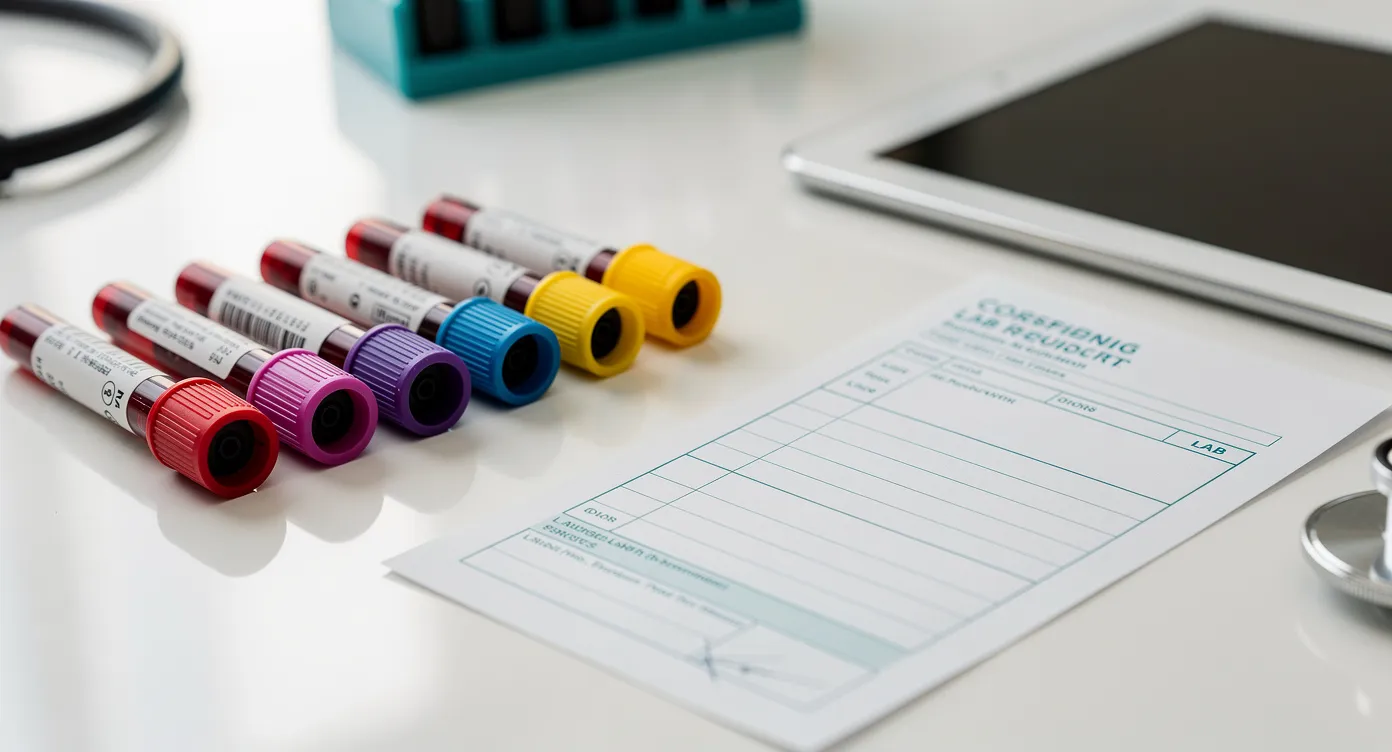
This is the question that trips people up. In Ontario, you can't simply walk into a lab and ask for a blood test. You need a requisition, which is a form signed by a physician or Nurse Practitioner specifying which tests to run. OHIP covers the cost of most medically necessary blood tests when they're ordered by an authorized provider. That part is straightforward. The hard part is getting in front of a provider to request the requisition in the first place.
If you have a family doctor, you can ask for bloodwork at your next visit. Some physicians will also process requisition requests by phone or through their clinic portal. Walk-in clinics can technically order blood tests too, but many are reluctant to order screening bloodwork for patients who aren't their regular roster. They may only test for the acute complaint that brought you in.
Nurse Practitioners in Ontario have full authority to order blood tests, interpret results, diagnose conditions, and prescribe medications. This is the same scope of practice that makes NP-led clinics like Care& so effective for preventive health screening. When you see your NP for an annual check-up, they'll assess your risk factors and order exactly the panels you need. No guesswork, no under-ordering, no over-ordering.
For those who don't have any regular provider, the situation is tougher. Ontario's Health Care Connect program can help you find a family doctor or NP accepting new patients, but wait times can stretch to a year or more. In the meantime, your preventive care shouldn't be on hold. That's exactly the scenario Care& was built for. Here's how it works: you can book an appointment, get your requisition, and have your blood drawn on-site at our Yorkville clinic.
Want to learn more about how Care& works?
See How It WorksWhat to Expect Before, During, and After Your Blood Test
If it's been a while since your last blood draw, or if this is your first time, knowing what to expect can make the experience much more comfortable.
Before Your Test
Some blood tests require fasting. A lipid panel and fasting glucose both need you to avoid eating or drinking anything other than water for eight to twelve hours beforehand. Your provider will tell you in advance if fasting is required. Morning appointments work well for fasting bloodwork, since most of your fast happens while you sleep. Stay well-hydrated with water. It makes your veins easier to find and the draw quicker.
If you take daily medications, ask your healthcare provider whether you should take them before or after the draw. Most medications can be taken as usual, but there are exceptions. If you're pregnant, breastfeeding, or planning a pregnancy, let your provider know, as this may change which tests are ordered or how results are interpreted.
During Your Test
A routine blood draw takes about five minutes. A phlebotomist or nurse will tie a tourniquet around your upper arm, clean the area with an alcohol swab, and insert a needle into a vein, usually in the crook of your elbow. You'll feel a brief pinch. Multiple tubes may be collected depending on what's been ordered. If you're nervous about needles, it's completely fine to look away, listen to music, or ask the person drawing your blood to talk you through it. Letting them know you're anxious isn't unusual and it helps them help you.
After Your Test
You can resume normal activities immediately. A small bandage stays on for an hour or so. Mild bruising at the site is common and nothing to worry about. Results typically take one to five business days depending on the lab and the tests ordered. Here's where the experience can vary a lot depending on your provider.
At some clinics, you might get a generic letter in the mail saying "results normal" with no further context. Or worse, you hear nothing at all and assume no news is good news. At Care& Family Health, your results are available through the Care& app at app.careand.ca, and your NP reviews them with you. Not just a pass-or-fail verdict, but what the numbers actually mean for your health, what trends to watch, and what steps to take next.
Care& members see the same Nurse Practitioner at every visit. That means the person reviewing your bloodwork is the same person who knows your history, your medications, and your health goals. No repeating yourself. No starting over. You can meet our NPs here.
A Note About Children's Bloodwork
Routine bloodwork recommendations for children and adolescents differ from those for adults. Screening schedules, reference ranges, and the tests themselves may vary based on age and developmental stage. If you're wondering whether your child needs blood tests, consult with a healthcare provider who can assess their individual needs. Pediatric management follows its own guidelines and shouldn't be assumed to mirror adult screening.
While abnormal blood test results rarely require emergency care, certain situations do warrant urgent attention. If you experience sudden chest pain, severe shortness of breath, signs of a stroke (facial drooping, arm weakness, speech difficulty), or symptoms of severe anemia like fainting or a rapid heartbeat at rest, call 911 or go to your nearest emergency department immediately. Don't wait for a follow-up appointment.
When to See Your Nurse Practitioner
If any of the following apply to you, it's a good time to book an appointment for bloodwork. You haven't had blood tests in more than two years. You're over 40 and have never had a lipid panel. You have a family history of diabetes, heart disease, or thyroid conditions. You're experiencing unexplained symptoms like fatigue, weight changes, or brain fog. You've started a new medication that requires monitoring. Or you simply want a clear picture of where your health stands right now.
If you have a family doctor covered by OHIP, that's a great starting point. Ask them to order your bloodwork at your next visit. But if you're one of the many Torontonians who can't get an appointment within a reasonable timeframe, or if you don't have a provider at all, waiting months for routine screening doesn't make sense. Care& offers an alternative. Our membership costs $450 plus HST per year and includes unlimited visits with your dedicated NP and on-premise lab work. It's not covered by OHIP, but it's designed for people who value actually getting the care they need.
Whether you come in for a single pay-per-visit appointment or become a member, your Nurse Practitioner at Care& will take the time to review your health history, order the appropriate blood tests, and explain every result. If something needs follow-up, whether it's a lifestyle change, a new medication, or a referral to a specialist, your NP handles that too. If you take other medications, your provider can help you choose options that won't cause interactions.
Frequently Asked Questions
Can I get a blood test without a doctor in Ontario?
No, you cannot order your own blood tests in Ontario. You need a requisition from an authorized healthcare provider, which includes physicians and Nurse Practitioners. Walk-in clinics can issue requisitions, but they may be limited in what screening tests they'll order for non-rostered patients. Your best option is to see a provider who knows your health history and can order the right panels.
Do I need to fast before a blood test?
It depends on which tests are being ordered. A fasting lipid panel and fasting glucose require eight to twelve hours without food. Water is fine and encouraged. A CBC, thyroid test, and most other panels don't require fasting. Your provider will let you know when they order the requisition. When in doubt, a morning appointment after an overnight fast covers most scenarios.
What does it mean if my blood test results are "abnormal"?
An abnormal result doesn't automatically mean something is seriously wrong. Lab reference ranges are based on population averages, and a value slightly outside the range can be completely normal for you. Context matters. Mild dehydration before a draw can skew certain numbers. A single elevated reading may need to be retested before any conclusions are drawn. This is why reviewing results with a knowledgeable provider is so important.
Are routine blood tests covered by OHIP?
Yes, medically necessary blood tests ordered by an authorized provider are covered by OHIP. The lab work itself is billed to OHIP regardless of whether the requisition comes from a physician or a Nurse Practitioner. Some tests, like certain vitamin panels or tests ordered purely for personal curiosity without clinical indication, may not be covered. Your provider can clarify which tests OHIP will and won't cover.
I can't find a family doctor in Toronto. How do I get routine bloodwork?
You're not alone. Over a million Ontarians don't have a regular primary care provider. Care& Family Health was built specifically for this gap. You can see a Nurse Practitioner on a pay-per-visit basis ($100 per visit) or become a member for $450 plus HST per year for unlimited visits. Your NP will order your bloodwork, you can have it drawn on-site, and your results are reviewed with you in a follow-up appointment. It's not covered by OHIP, but many people find the access, continuity, and quality of care well worth it. You can check membership pricing for full details.
Ready to prioritize your health?
Book an appointment with our experienced Nurse Practitioners today.
Book AppointmentOr call us at (647) 951-4770