
In This Article
Hormonal vs. Copper IUDs: Choosing the Right Type
An IUD (intrauterine device) is a small, T-shaped device placed inside the uterus to prevent pregnancy. With a success rate above 99%, it's one of the most effective forms of contraception available. But not all IUDs work the same way, and the type you choose will affect everything from your period to how long the device lasts. Understanding the differences before your appointment helps you walk in feeling confident rather than overwhelmed.
Hormonal IUDs
Hormonal IUDs release a small, steady amount of levonorgestrel, a synthetic progestin, directly into the uterus. In Canada, the most common brands are Mirena, Kyleena, and Jaydess. They work by thickening cervical mucus and thinning the uterine lining, while also partially suppressing ovulation. Most people notice lighter periods over time, and some stop menstruating entirely after the first year. Depending on the brand, a hormonal IUD lasts between three and eight years.
Beyond contraception, hormonal IUDs are sometimes recommended for managing heavy menstrual bleeding, endometriosis-related pain, or as the progestin component of hormone therapy during menopause. If any of those situations apply to you, it's a conversation worth having with your healthcare provider.
Copper IUDs
The copper IUD contains no hormones at all. Instead, the copper creates an environment in the uterus that's toxic to sperm. It begins working immediately after insertion, which means it also functions as emergency contraception when placed within five days of unprotected sex. Copper IUDs can last up to ten years, making them the longest-lasting reversible contraceptive option on the market.
The trade-off is that copper IUDs often make periods heavier and crampier, particularly in the first three to six months. If you already deal with heavy menstrual bleeding, a hormonal IUD might be a better fit. But for people who want to avoid hormones entirely, the copper IUD is a reliable, long-term choice that requires almost no maintenance once it's in place.
Understanding which type suits you is the first step. The next question most people have is what actually happens in the room during the procedure.
What to Expect Before and During IUD Insertion
Before Your Appointment
There's one logistical detail that catches many people off guard. At Care&, you'll need to have your IUD already prescribed and picked up from a pharmacy before your insertion appointment. The clinic does not stock IUD devices on-site. Your Nurse Practitioner will write the prescription during an initial women's health consultation, and you'll fill it at your local pharmacy. Bring the sealed, unopened package with you to your insertion visit.
Your NP can help you choose the right IUD brand based on your medical history, current medications, and reproductive goals. It's also a good idea to check with your insurance provider ahead of time, since many private drug plans cover part or all of the device cost. If you take other medications, your provider can help you choose options that won't cause interactions.
During the Procedure
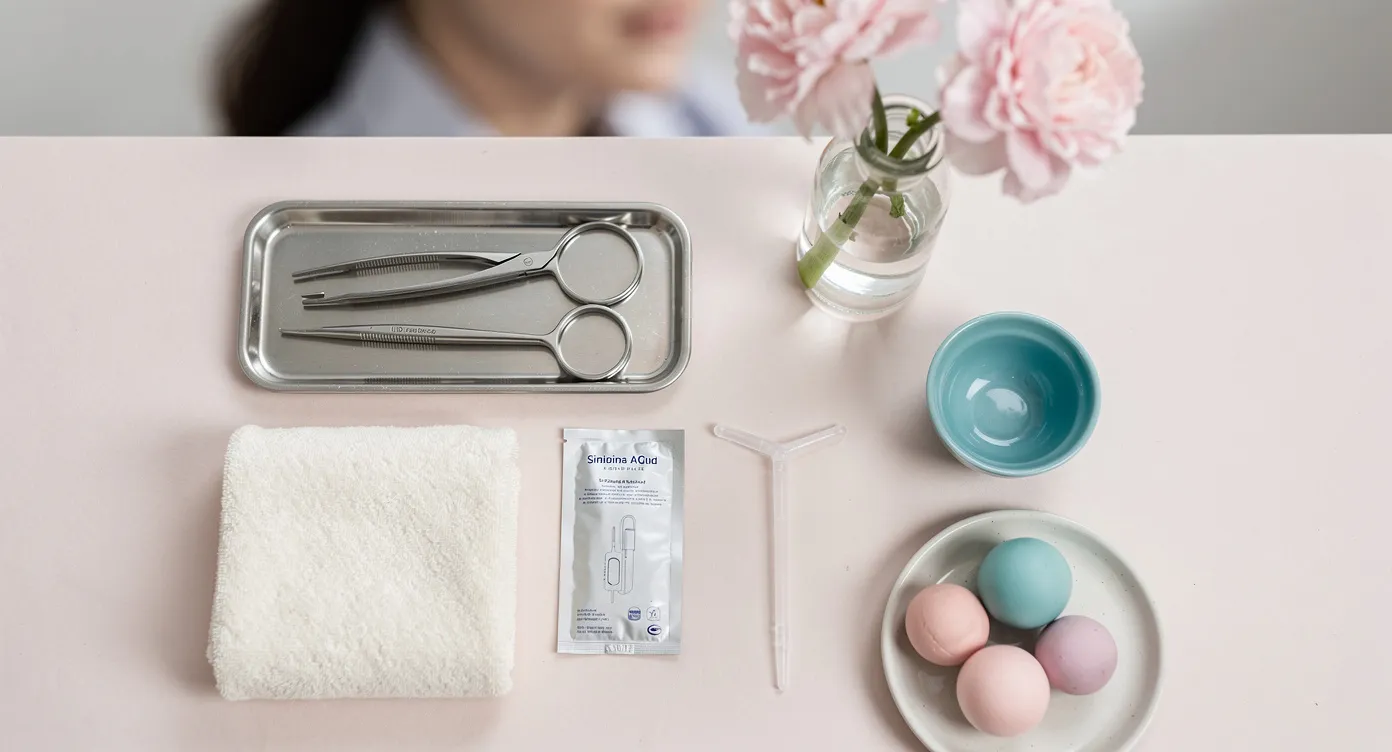
The actual insertion typically takes about five to ten minutes. You'll lie on the exam table in the same position as a Pap test. Your provider will insert a speculum, clean the cervix, and then use a thin instrument called a uterine sound to measure the depth of your uterus. The IUD is placed through the cervical canal using a small insertion tube, and the strings are trimmed to hang just inside the vaginal canal.
You'll likely feel cramping during the sounding and insertion steps. Some people describe it as a brief, sharp pressure. Others experience more intense discomfort that lasts a little longer. Either way, the most uncomfortable part is usually over in under a minute. Most people are able to leave the clinic within 15 to 20 minutes of the procedure, though you may want to sit for a few minutes and let the initial cramping ease before heading out.
Pain During IUD Insertion and What Helps
Social media has made a lot of people anxious about IUD insertion pain, and that anxiety is understandable. The experience is genuinely uncomfortable for most people. Those who have never been pregnant, who have a narrow cervical canal, or who are particularly sensitive to cramping tend to find it more intense. But modern pain management approaches make a meaningful difference, and there's no reason to white-knuckle through it.
At Care& Family Health, your Nurse Practitioner uses a gentle insertion technique combined with several layers of pain relief. This includes local anesthetic applied directly to the cervix, in-clinic pain relief options, and the ability to prescribe pain medication for you to take before your appointment. Your provider may also suggest taking ibuprofen about an hour before the visit, as directed. These steps, used together, take the edge off considerably.
"IUD insertion doesn't have to be something you dread. With proper pain management and a provider who takes their time, most people are surprised by how manageable it feels."
What matters most is having a provider who explains each step, checks in with you during the procedure, and adjusts their approach based on how you're feeling. Rushing through an insertion makes it harder for everyone. One of the real benefits of booking with a clinic that offers unrushed appointments is that your provider isn't watching the clock. They can slow down, let you breathe, and make sure you're as comfortable as possible before continuing.
If you're pregnant, breastfeeding, or planning a pregnancy, talk to your healthcare provider before having an IUD placed. Some hormonal IUDs are considered safe during breastfeeding, but the timing of insertion matters and should be discussed individually.
IUD Insertion Cost in Toronto
Cost is one of the most common questions people have when searching for IUD insertion in Toronto. There are two separate expenses to understand: the procedure fee and the device itself. Knowing both ahead of time helps you plan without any surprises.
The Procedure Fee
At Care&, the IUD insertion procedure is included at no additional cost for Family Practice members. If you're using the pay-per-visit option, the insertion procedure fee is $250. Care& is not covered by OHIP, so these are out-of-pocket costs. That said, many private insurance plans do reimburse Nurse Practitioner visits and procedures, so check your benefits and submit a receipt after your appointment.
Care& Family Practice membership costs $450+HST per year and includes unlimited visits, on-premise lab work, and continuity with the same Nurse Practitioner at every appointment. For members, IUD insertions carry no additional procedure fee. See membership details.
The Device Cost
The IUD device itself typically costs between $100 and $450, depending on the type and brand. Copper IUDs are generally at the lower end of that range, while hormonal options like Mirena and Kyleena cost more. Many private drug plans cover the device in full or in part. Even without coverage, the per-year cost of an IUD is remarkably low compared to monthly birth control pills, patches, or rings. A device that lasts five to ten years often ends up being the most cost-effective contraceptive option available.
Once the cost question is settled, most people feel ready to move forward. The last piece is knowing what to do after the IUD is in place.
Ready to discuss your IUD options? Your provider can walk you through every step.
Explore IUD InsertionsAftercare and Recovery
Most people feel crampy for the rest of the day after IUD insertion. Some experience light spotting or irregular bleeding that lasts anywhere from a few days to a few weeks. This is normal. Over-the-counter pain relief like ibuprofen or acetaminophen, a heating pad, and rest are generally all you need for the first day or two.
Avoid using tampons, menstrual cups, and having sexual intercourse for 24 to 48 hours after insertion. Your provider will give you specific guidance on when to resume. If you received a copper IUD, expect your next few periods to be heavier and crampier than usual. These side effects typically ease up after three to six months. With a hormonal IUD, irregular spotting is common in the first several months before periods lighten significantly. Some people find their periods disappear almost entirely, which is a normal effect of the progestin and not a cause for concern.
Your NP will schedule a follow-up appointment about four to six weeks after insertion to confirm the IUD is properly positioned. Between visits, you can check the strings yourself by reaching into the vaginal canal with clean fingers. The strings should feel like thin fishing line near the cervix. If you can't feel them, or if they seem noticeably longer or shorter than before, contact your provider. Don't try to adjust or pull the strings yourself.
After IUD insertion, go to the nearest emergency department or call 911 if you experience severe pelvic pain that doesn't improve with medication, heavy bleeding that soaks through a pad in less than an hour, fever above 38°C (100.4°F), foul-smelling vaginal discharge, or signs that the IUD has partially or fully come out. These could indicate perforation, infection, or expulsion, all of which require urgent medical attention.
Members can reach their provider by phone or video between visits through the Care& app. If you're unsure whether a symptom after IUD insertion is normal, you don't have to wait for your follow-up to get reassurance. See how it works.
When to See Your Nurse Practitioner
Whether you're considering an IUD for the first time, thinking about switching from another contraceptive method, or ready to have your current device removed and replaced, a conversation with your healthcare provider is the right place to start. They can review your medical history, discuss which IUD type suits your needs, write the prescription, and perform the insertion, all within the same care relationship.
If you have a family doctor through OHIP, they may be able to help. But many family doctors in Toronto don't perform IUD insertions in their offices, which often means a referral to a gynecologist and a wait that can stretch to several months. If you don't have a family doctor, or if you want a longer, more in-depth IUD appointment in Toronto with a provider who won't rush, Care& Family Health is worth considering. IUD insertions are performed by experienced Nurse Practitioners at the Yorkville clinic.
The clinic also handles IUD removals, whether your device is approaching the end of its lifespan, you're experiencing side effects you'd rather not live with, or you're planning a pregnancy. Removals are generally quicker and less uncomfortable than insertions. Your provider can discuss next steps for contraception or fertility planning during the same visit, so you leave with a clear plan.
Frequently Asked Questions
Does IUD insertion hurt?
Most people feel moderate to strong cramping during the insertion, particularly when the uterus is measured and the device is placed. The most uncomfortable part usually lasts under a minute and then fades to dull, period-like cramping. Taking ibuprofen beforehand, as directed by your provider, and choosing a clinic that offers local anesthetic and other pain management options can make a significant difference.
Can I get an IUD if I've never been pregnant?
Yes. IUDs are safe and effective for people who have never been pregnant. Smaller-frame devices like Kyleena and Jaydess are specifically designed for people with a smaller uterus. Insertion may be slightly more uncomfortable without a history of pregnancy, but it remains a routine procedure. Adolescents can also be candidates for an IUD, though the approach and counseling may differ for younger patients. A conversation with a healthcare provider is the best starting point for anyone under 18.
How long does an IUD last?
It depends on the type. Jaydess lasts up to three years. Kyleena lasts up to five years. Mirena is approved for up to eight years. Copper IUDs can last up to ten years. Your provider can help you choose based on how long you want coverage and whether you prefer a hormonal or non-hormonal device. Any IUD can be removed earlier if you change your mind or want to try for a pregnancy.
Can an IUD fall out?
Expulsion is uncommon but possible, especially in the first few months after insertion. The risk is slightly higher during your period. Signs include feeling the hard plastic of the device (not just the soft strings), unusual cramping, or a noticeable change in string length. If you suspect your IUD has shifted, contact your provider and use backup contraception until they can confirm its position.
Where can I find a provider for IUD insertion near me in Toronto?
If you don't have a family doctor, or if your current provider doesn't offer IUD insertions, Care& Family Health performs the procedure at its Yorkville clinic. Your Nurse Practitioner handles everything from the initial consultation and prescription to the insertion itself, with a focus on thorough pain management and appointments that give you enough time to ask questions and feel comfortable with your decision.
Ready to prioritize your health?
Book an appointment with our experienced Nurse Practitioners today.
Book AppointmentOr call us at (647) 951-4770