
Are Iron Infusion Side Effects Days Later Normal?
Yes, in most cases they are. Flu-like symptoms that start roughly 24 to 48 hours after an iron infusion are one of the most frequently reported side effects of iron infusion. People describe muscle aches, joint pain, headache, tiredness, and sometimes a low-grade fever or chills. These symptoms are usually mild to moderate, and they tend to settle on their own within a few days.
This delayed pattern is quite different from an allergic reaction. Serious allergic reactions to modern IV iron are rare, and when they happen, they almost always occur during the infusion or shortly afterward. That's exactly why you're observed while the iron goes in and for a short period after. At Care&, your NP watches for early warning signs during the visit and checks in with you in the days that follow, because a delayed reaction iron infusion patients experience is easier to manage when someone already knows your history.
If you haven't had your infusion yet, our overview of what to expect during an iron infusion, from the visit to recovery can help you plan your week. And if you'd like a broader look at the full range of reactions, our guide to which iron infusion side effects are normal and which aren't covers the during-and-after picture in more detail.
Iron Infusion Flu-Like Symptoms: Why They Happen
IV iron is delivered bound to a carbohydrate shell that helps your body absorb it safely. As your immune system processes that complex, it can release inflammatory signalling molecules. Those are the same chemical messengers responsible for the achy, run-down feeling you get with a cold or flu. It isn't an infection, and it doesn't mean the iron isn't working.
Some people are more likely to notice this reaction than others. It shows up more often after a first infusion, with larger single doses, and in people who already live with an inflammatory condition such as rheumatoid arthritis or inflammatory bowel disease. Many people who react the first time find that later infusions are much gentler.
How Long Do Iron Infusion Flu-Like Symptoms Last?
For most people, symptoms peak within the first two days and fade by day three or four. Occasionally, joint and muscle aches linger closer to a week. The trend matters more than the exact timeline. You should be feeling steadily better each day, not worse.
Easing Symptoms at Home
Rest, fluids, and a lighter schedule go a long way. A warm shower or heating pad can help sore muscles, and a cool cloth may ease a headache. Some people use an over-the-counter pain reliever, taken as directed by your provider. Ask your provider whether you should pause any oral iron supplements while your body absorbs the infusion, since taking both usually isn't necessary.
If you're pregnant, breastfeeding, or planning a pregnancy, check with your provider before starting any new medication. If you take other medications, your provider can help you choose options that won't cause interactions. Children who receive IV iron may have different reactions and management plans, so parents should speak with their child's healthcare provider about what to watch for.
Care& members can message their care team through the Care& app if symptoms appear after an infusion. You'll hear back from the same NP who oversaw your treatment, and follow-up bloodwork to recheck your iron levels can be done at our on-premise lab.
Flu-like aches are the most common delayed effect, but they aren't the only one. The next one people often search for shows up on the skin rather than in the joints.
Iron Infusion Skin Staining: What It Is and Why It Matters
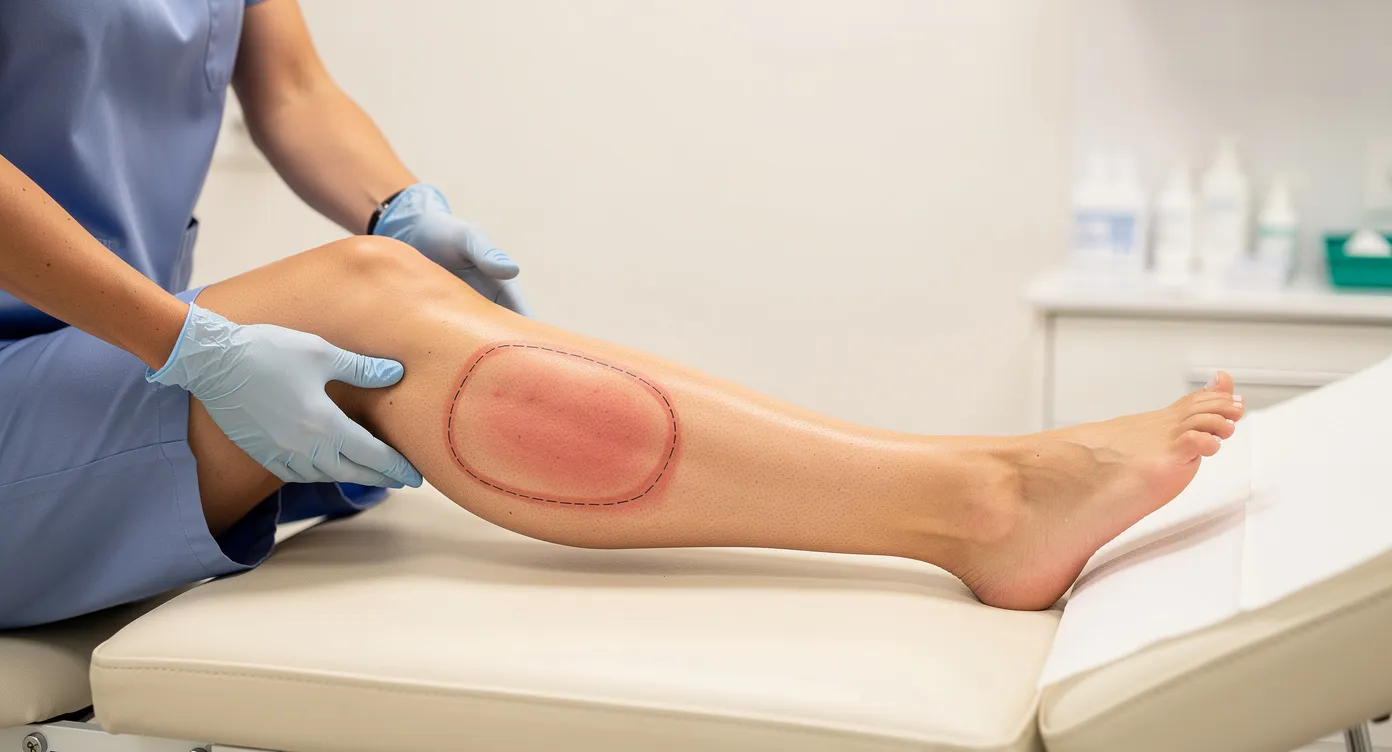
Skin staining happens when iron leaks out of the vein and into the surrounding tissue. This is called extravasation. It can leave a brown or rust-coloured mark near the IV site. Sometimes the mark becomes more noticeable over the following days as the iron settles into the skin. Unlike a bruise, iron staining can last for months or years, and in some cases it's permanent.
Staining is uncommon, and the best protection is careful IV placement and close monitoring. If you feel burning, stinging, tightness, or swelling at the IV site during your infusion, tell the person monitoring you right away. Stopping the infusion quickly limits how much iron reaches the tissue. You can learn more about how we place and monitor IV lines on our IV therapy and iron infusion page for Care&.
If you notice a brownish patch developing days after your infusion, take a photo and let your provider know. It won't harm your health, but documenting it helps, and some people later explore cosmetic options such as laser treatment with a dermatologist.
Concerned about your symptoms? Your NP can help.
Meet Our NPsSide Effects of Iron Infusion That Appear Weeks Later
Some iron formulations, particularly ferric carboxymaltose, can lower phosphate levels in the blood in the weeks after treatment. Many people never notice it. Others feel unusually tired, weak, or achy in their bones. The risk is higher with repeated doses, so if you need ongoing infusions, your provider may order a simple blood test to check your phosphate.
It also helps to know that iron infusions aren't instant. Your iron stores begin to rise quickly, but hemoglobin usually takes two to four weeks to climb in a meaningful way. Feeling tired a week after treatment doesn't necessarily mean it failed. If your anemia is linked to an ongoing condition like kidney disease or inflammatory bowel disease, coordinated chronic disease management can help keep your iron levels and underlying condition on track together.
Call 911 if you develop trouble breathing, swelling of your face, lips, tongue, or throat, widespread hives, chest pain, a racing heartbeat, or feel faint. If you carry an epinephrine auto-injector (EpiPen), use it immediately and then call 911.
Contact your provider promptly if you have a fever above 38.5°C, symptoms that get worse instead of better after two or three days, or redness, warmth, pain, or discharge spreading from the IV site.
When to See Your Nurse Practitioner
Reach out if your post-infusion symptoms last longer than a week, keep coming back, or simply don't feel right to you. OHIP-covered care through hospital clinics and family practices remains an option, though wait times in Toronto can be long. Care& is not covered by OHIP, and our membership-based Family Practice offers unrushed follow-up with the same provider every time. You can compare options in our breakdown of iron infusion costs and OHIP coverage in Toronto.
Frequently Asked Questions
How long do iron infusion side effects last?
Most delayed flu-like symptoms begin within one to two days and resolve within three to four days. Joint aches occasionally linger for up to a week. Skin staining is the exception, since it can persist for months or longer. If symptoms are worsening rather than improving, contact your healthcare provider.
Will I have the same reaction with my next iron infusion?
Not necessarily. Delayed reactions are most common after a first infusion, and many people find later infusions much easier. Tell your provider about any symptoms you had last time, since adjusting the dose, timing, or infusion rate may help.
I can't find a family doctor in Toronto. Who can follow up after my iron infusion?
You're far from alone, since many Torontonians are still without a regular family provider. Care& Family Health offers a membership-based option, not covered by OHIP, with unrushed appointments and a dedicated NP who manages your infusions, bloodwork, and follow-up. You can see how membership works and whether it fits your needs before committing.
Ready to prioritize your health?
Book an appointment with our experienced Nurse Practitioners today.
Book AppointmentOr call us at (647) 951-4770