
In This Article
Bug Bite Cellulitis vs. Allergic Reaction at a Glance
A red swollen bug bite can come from two very different processes. An allergic reaction, sometimes called a large local reaction, is your immune system responding to proteins in the insect's saliva or venom. Cellulitis is a bacterial infection of the deeper layers of skin, usually caused by bacteria that slip in through the tiny break the bite created or through the scratches you added afterward.
They can look surprisingly alike on day one. The differences show up in timing and sensation, and above all in what the redness does over the next 24 to 48 hours. The table below sums up the patterns most healthcare providers look for.
No single row settles it on its own. A very itchy bite can still become infected once it's scratched open, which is why the trend over time matters so much. Let's look at each one more closely.
What an Allergic Reaction to a Bug Bite Looks Like
Most people expect a mosquito bite to be a small itchy bump. For some, though, the body mounts a much bigger response. The redness and swelling can spread several centimetres past the bite, and a bite on the ankle can make the whole lower leg look puffy. When this happens with mosquito bites, it's sometimes called "skeeter syndrome," and it's especially common in young children and in people who haven't been exposed to local mosquitoes much.
Blackfly bites up north and wasp or yellow jacket stings, which pick up in Toronto every September as they swarm patios and garbage bins, can cause similar large local reactions. The swelling is often firm and may feel a little warm. What sets it apart is that it shows up quickly, it's intensely itchy, and it tends to peak within the first day or two before gradually shrinking over the following week.
A large local reaction is uncomfortable but usually not dangerous. It isn't the same as a whole-body allergic reaction, which affects breathing or circulation and is an emergency. If you're also wondering about disease risk from local mosquitoes, our post on mosquito bites and West Nile virus in Ontario explains which symptoms are expected and which aren't.
Signs of Cellulitis From a Bug Bite
Cellulitis from a bug bite usually doesn't appear right away. The bite itches, you scratch it (often in your sleep), and the broken skin gives common skin bacteria like streptococcus or staphylococcus a way in. A day or several days later, the area starts to change in a different way.
Instead of itching, it starts to hurt. The skin becomes tender when you press on it and feels hot compared with the surrounding area. The redness spreads outward, and the edges may look blurry rather than sharply defined. Some people develop a fever or chills, or just feel run down. You might notice red streaks tracking away from the bite toward your armpit or groin, which suggests the infection is moving along lymph channels. A pocket of pus or a firm, fluctuant bump can mean an abscess has formed.
Certain people are more likely to develop cellulitis or have it become serious. That includes people living with diabetes, poor circulation, or a weakened immune system, and those with chronic swelling in their legs. If you manage one of these conditions, good chronic disease management also means having a plan for skin infections before they happen. For a fuller picture of how this infection develops from cuts and scrapes too, see our guide to cellulitis and when a skin infection becomes serious.
Knowing the signs is helpful. Watching how they change is even more useful, and that's something you can do from your couch tonight.
How to Tell Them Apart at Home
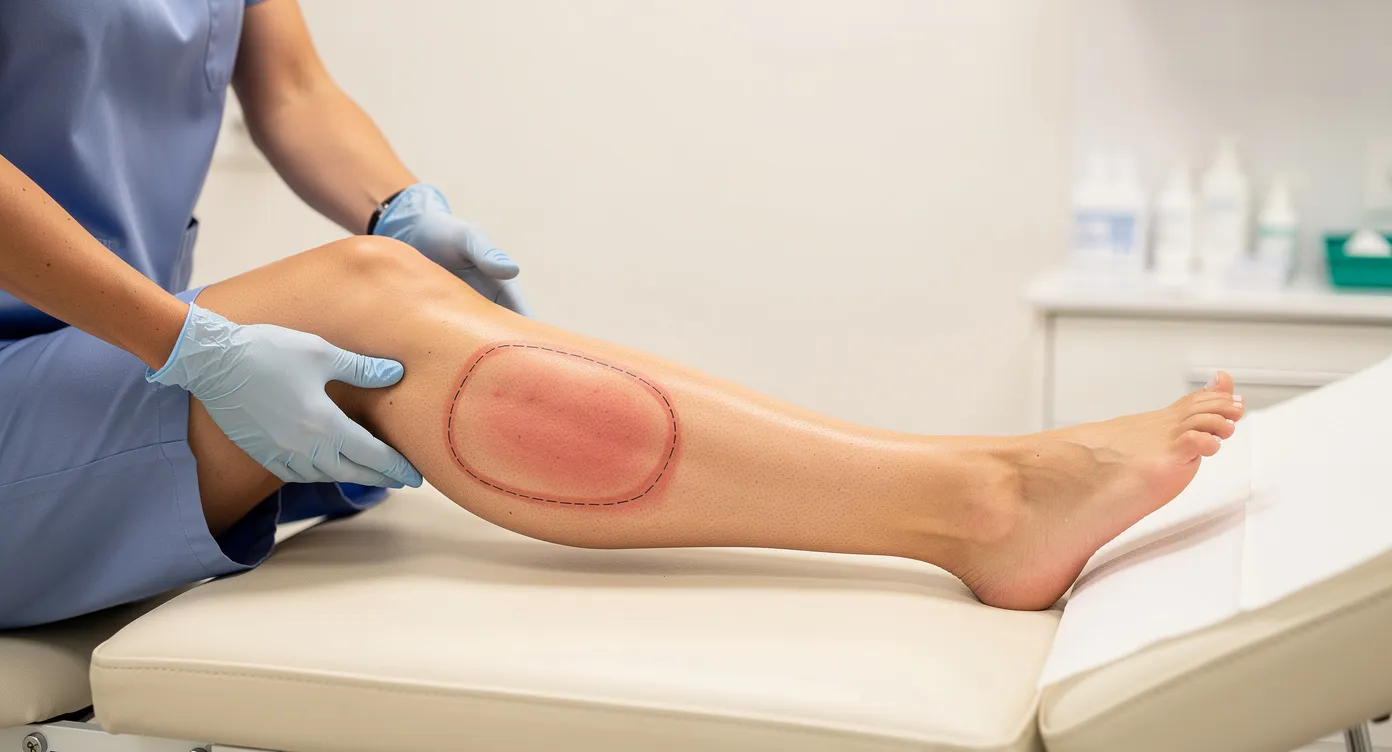
The single most useful tool is a pen. Trace a line around the outer edge of the redness and write the date and time beside it. Check again in 8 to 12 hours. If the redness has pulled back inside the line, or stayed the same while the itch settles, an allergic reaction is more likely. If it has pushed well past the line and the area hurts more, that points toward infection.
Next, ask yourself whether it itches or hurts. Both can happen, but a bite that has shifted from mostly itchy to mostly painful is a warning sign. Timing matters too. Swelling that appeared within hours of the bite is typical of a reaction, while swelling that appeared or got worse on day two or three deserves a closer look.
Finally, check how you feel overall. Taking your temperature is worth the thirty seconds. Allergic reactions stay local. Infections can make your whole body feel unwell.
What About Tick Bites?
Ticks are increasingly common in Toronto ravines and parks like the Rouge. A slowly expanding red rash around a tick bite, sometimes with a clearer centre, may be erythema migrans, an early sign of Lyme disease. It often isn't very itchy or painful. This is a different situation from both conditions in this article, so any expanding rash after a tick bite should be assessed by a healthcare provider.
Care& memberships include video and phone visits alongside in-person care. For a worrying bite, a video visit lets your NP look at the redness on camera, review how it's changed, and decide whether you need to come in to our Yorkville clinic.
Antihistamines or Antibiotics: Treating Each One
Getting the diagnosis right matters because the treatments don't overlap. An antihistamine won't clear an infection. Antibiotics won't calm an allergic reaction, and taking them when they aren't needed can cause side effects and contributes to antibiotic resistance.
Treating an Allergic Bug Bite Reaction
Most large local reactions improve with simple care. Cool compresses help with swelling, and elevating the limb can bring it down further. Over-the-counter oral antihistamines such as cetirizine or loratadine can ease itching, and a mild hydrocortisone cream may reduce inflammation on the skin. Keep your nails short and try not to scratch, since scratching is exactly how an allergic bite becomes an infected one. Use any product as directed on the label or by your provider.
Treating Cellulitis From a Bug Bite
Cellulitis generally needs prescription antibiotics, taken for the full course your provider recommends. Most people start to feel better within two to three days, though the redness can look slightly worse on the first day before it improves. That's one reason your provider may ask you to mark the edges and check back. If an abscess has formed, it may need to be drained. Rest and elevation help alongside the medication.
If you're pregnant, breastfeeding, or planning a pregnancy, check with your provider before starting any new medication. If you take other medications, your provider can help you choose options that won't cause interactions. Pediatric management may differ, so if the bite is on your child, especially a baby or toddler, consult a provider about their care rather than relying on adult guidance. At Care&, we're happy to see the whole family, and kids with big bite reactions are a very familiar sight during mosquito season.
Call 911 if you have trouble breathing, swelling of your lips, tongue, or throat, hives spreading across your body, dizziness, or a sense of faintness after a bite or sting. If you carry an epinephrine auto-injector (EpiPen), use it immediately and then call 911.
Go to the emergency department if redness is spreading quickly over hours, you have a high fever or feel very unwell, the infection is near your eye, the pain seems far worse than the skin looks, or the skin turns dark, blistered, or numb.
Concerned about your symptoms? Your NP can help.
Meet Our NPsWhen to See Your Nurse Practitioner
If your bite is itchy, swelled up quickly, and is holding steady or shrinking inside your pen line, home care is usually reasonable. Book an assessment if the redness is spreading past the line, the area is becoming more painful or warmer, you notice pus, or you've developed a low-grade fever. It's also worth being seen sooner if you have diabetes or circulation problems, or if the bite is on your face, hands, or near a joint. When in doubt, an assessment costs you far less than an infection that's been left too long.
In Ontario, you have several OHIP-covered options. If you have a family doctor who can see you promptly, that's a great place to start. Walk-in clinics and urgent care centres are also available, and the emergency department is the right choice for any of the red flags above. Many Torontonians, though, don't have a family doctor, or find it hard to get timely follow-up to check whether an infection is actually improving.
That's where Care& fits in for some people. Care& is not covered by OHIP. Membership is $450 plus HST per year for unlimited in-person, phone, and video visits, or you can pay $100 per visit, in person or by phone or video. You see the same NP each time, so the provider who looks at your bite on Tuesday is the one checking it on Thursday. Appointments start on time and aren't rushed, and lab work can be done on site if your provider needs it. You can learn more about how Care& memberships work or read about our Family Practice care in Toronto. Our clinic is open Monday to Friday, 8am to 5pm, and you can reach us at (647) 951-4770.
Frequently Asked Questions
Can a bug bite turn into cellulitis several days later?
Yes. Cellulitis often develops one to three days after the bite, and sometimes later, especially if the skin has been scratched open. A bite that was improving and then becomes more painful, warmer, or redder should be assessed by a healthcare provider.
Will antibiotic ointment treat an infected bug bite?
Over-the-counter antibiotic ointment may help keep a small scratched area clean, but it doesn't reach the deeper skin layers where cellulitis lives. Spreading redness from a bug bite usually needs an assessment, and oral antibiotics if an infection is confirmed.
How long does a large local reaction to a bite last?
Most large local reactions peak within 24 to 48 hours and fade over five to ten days. If the swelling keeps growing after the second day, or pain starts to replace itch, it's worth having it checked for infection.
What if I don't have a family doctor in Toronto and need my bite checked?
OHIP-covered walk-in clinics and urgent care centres can assess a bite, and the emergency department is there for severe symptoms. If you'd like timely, unrushed appointments with a dedicated NP who can follow up on how your skin is healing, Care& Family Health offers membership-based Family Practice care that is not covered by OHIP, with in-person and virtual visits.
Ready to prioritize your health?
Book an appointment with our experienced Nurse Practitioners today.
Book AppointmentOr call us at (647) 951-4770