In This Article
What Cellulitis Is and How It Starts
Cellulitis is a bacterial infection of the deeper layers of your skin and the soft tissue just beneath it. Your skin is a remarkably good barrier, but it only takes a small opening for bacteria to slip past that defense. A bug bite you keep scratching, a paper-thin cut, a scrape on the sidewalk, a cracked heel, or even the tiny fissures caused by athlete's foot can all serve as the doorway. Once bacteria get in, they multiply in the tissue and trigger the inflammation that gives cellulitis its telltale look.
The two bacteria most often responsible are streptococcus and staphylococcus, both of which live harmlessly on skin surfaces until they find a way inside. The infection usually shows up on the lower legs, though it can appear anywhere, including the face, arms, and around surgical wounds. What makes cellulitis different from a simple surface scrape is that it settles below the skin, where topical creams cannot reach it. That is why it typically needs oral antibiotics rather than an over-the-counter ointment.
The frustrating part is how ordinary the starting point can be. Most people who develop cellulitis never think twice about the original injury. A bite from a Toronto summer evening on a patio, a blister from new running shoes along the waterfront, or a scratch from a houseplant can each be enough. The injury heals over on the surface while the trouble brews underneath.
Recognizing Cellulitis Symptoms
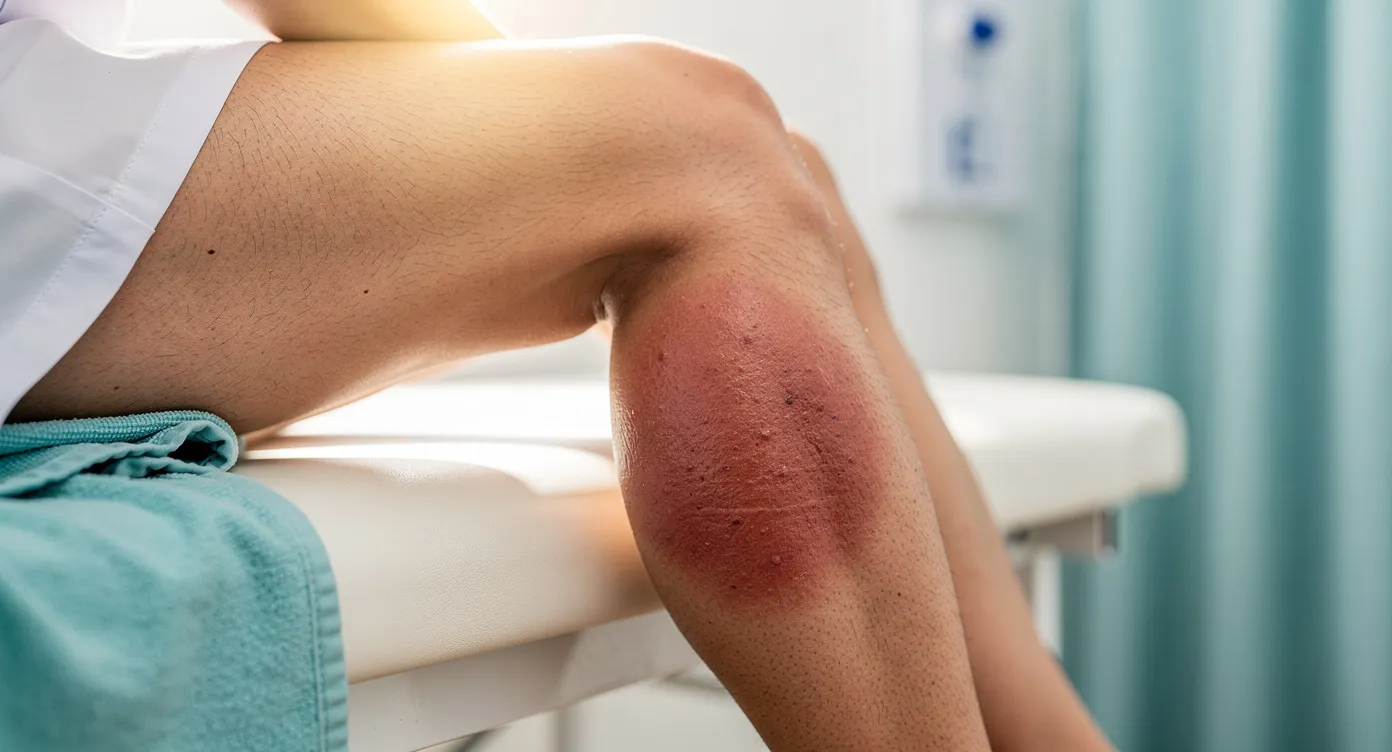
The classic signs cluster together and tend to worsen over hours rather than improving. The affected skin turns red or discolored, feels warm or even hot compared to the surrounding area, swells, and hurts. If you press the area, it is often tender and firm. Many people describe a tight, stretched sensation as the swelling builds. On darker skin tones the redness can be harder to see, so warmth, swelling, and pain become the more reliable clues.
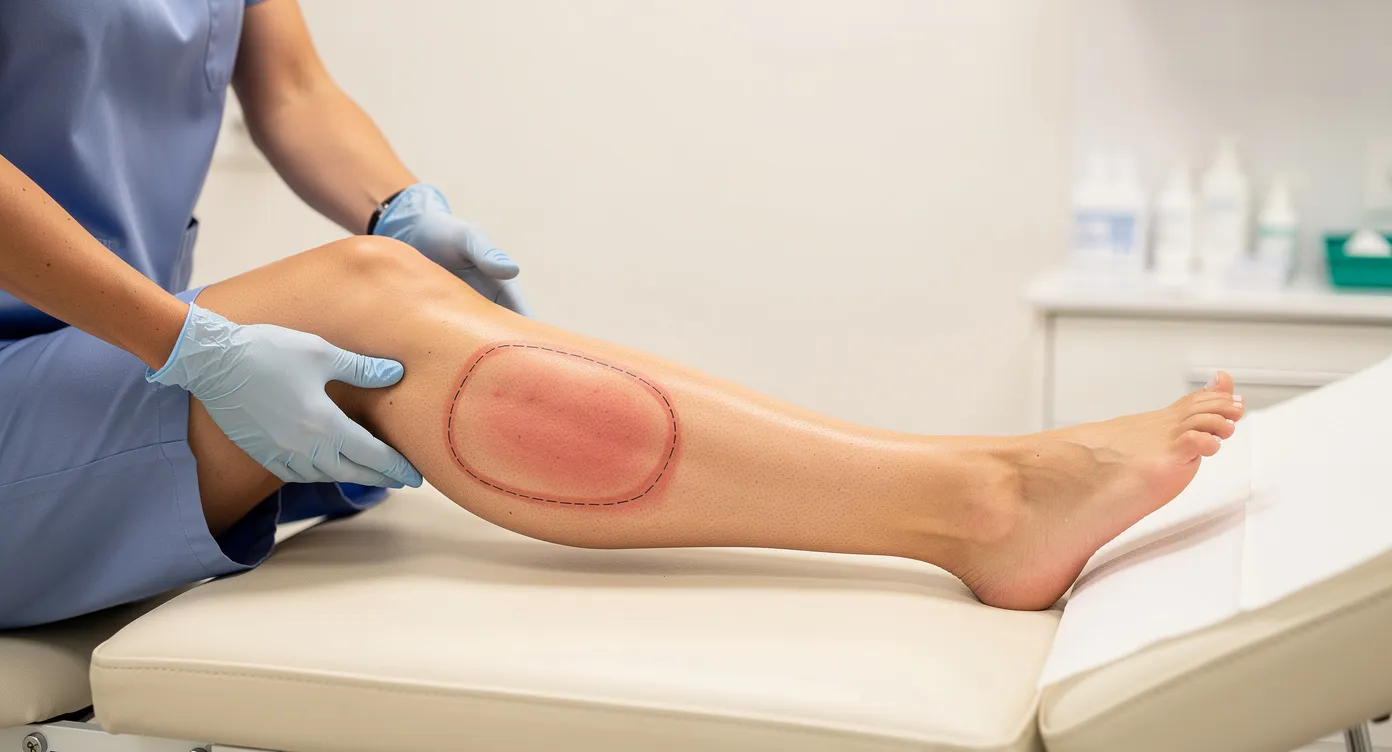
One of the most useful things you can do at home is track the border of the redness. Gently outline the edge with a pen and note the time. If the redness pushes past that line over the next several hours, the infection is actively spreading and needs prompt attention. Cellulitis that expands quickly is behaving aggressively, and waiting to see how it looks in a few days is the wrong instinct.
Symptoms that signal the infection is affecting your whole body
Cellulitis is not always confined to the skin. When bacteria start to overwhelm local defenses, you may develop fever, chills, sweating, fatigue, or a general sense of feeling unwell. Some people notice tender, swollen lymph nodes near the infected area, or faint red streaks running from the site toward the trunk of the body. These systemic symptoms are your body's alarm bells, and they mean the infection deserves same-week medical evaluation rather than watchful waiting.
"Cellulitis that expands quickly is behaving aggressively, and waiting to see how it looks in a few days is the wrong instinct."
Healing Versus a Spreading Infection
Every cut and bite comes with some redness and mild swelling in the first day or two. That is normal inflammation, your immune system doing its job. The key difference is the direction things are moving. A healing wound gets less red, less swollen, and less painful with each passing day. Cellulitis does the opposite. The redness widens, the pain intensifies, and the warmth grows more noticeable over 24 to 48 hours.
A normal healing scrape also tends to stay put. The redness hugs the edge of the wound and does not march outward across otherwise healthy skin. With cellulitis, you often see a red patch that keeps enlarging, sometimes with a poorly defined border that blends into the surrounding skin. Bug bites are a common source of confusion because they itch and swell on their own, but an ordinary bite settles down within a couple of days. A bite that becomes hot, increasingly painful, and larger by the hour has likely turned into something more.
Pain out of proportion to what you would expect is another red flag. A minor scrape should not throb or make it hard to walk. If a small injury on your leg has become surprisingly painful, that mismatch is worth taking seriously. Your Family Practice provider can assess the area, decide whether antibiotics are warranted, and rule out conditions that can mimic cellulitis, such as a blood clot or an allergic reaction.
Timing matters with cellulitis, and getting seen early can be the difference between a course of oral antibiotics and a hospital admission. At Care&, membership includes phone and video visits alongside in-person appointments, so if you notice spreading redness you can reach your own Nurse Practitioner and book a visit through the Care& app rather than sitting in a crowded waiting room for hours.
Who Is at Higher Risk
Anyone can develop cellulitis, but certain factors make it both more likely and more serious. People living with diabetes are especially vulnerable because higher blood sugar impairs the immune response and reduces sensation in the feet, which means small wounds go unnoticed and heal poorly. If you manage a long-term condition, keeping it well controlled genuinely lowers your infection risk, which is one reason ongoing Chronic Disease Management matters so much for skin health.
Other risk factors include swelling in the legs from poor circulation or lymphedema, a weakened immune system, obesity, and skin conditions that create chronic breaks in the barrier, such as eczema or athlete's foot. A history of cellulitis also raises the odds of it returning in the same area, because the earlier infection can leave lasting changes in the local lymphatic drainage. Older adults tend to have thinner, more fragile skin that tears easily, adding another layer of vulnerability.
None of this means a healthy young person is immune. Plenty of active, otherwise well Torontonians develop cellulitis after a scrape on the trail or a blister from a long walk. Risk factors raise the stakes, but the infection does not require them to take hold.
How Cellulitis Is Treated
Most cases of cellulitis respond well to a course of oral antibiotics, and the earlier treatment starts, the smoother the recovery. Your provider will choose an antibiotic based on the likely bacteria, the location of the infection, your medical history, and any allergies you have. The typical course runs several days to a couple of weeks, and it is important to finish the entire prescription even once the skin looks better, because stopping early can let the infection rebound. Dosing is always as directed by your provider.
Alongside antibiotics, a few supportive measures speed healing. Elevating an affected limb helps reduce swelling and encourages drainage. Keeping the area clean and covered protects it while it recovers. Over-the-counter pain relief can ease the tenderness, and marking the border of the redness lets you and your provider see whether the antibiotics are working. Within 48 to 72 hours of starting treatment, the redness should stop spreading and the pain should begin to ease. If it does not, your provider may need to switch antibiotics or consider whether a stronger, intravenous course in hospital is required.
If you're pregnant, breastfeeding, or planning a pregnancy, check with your provider before starting any new medication, since some antibiotics are preferred over others during this time. And if you take other medications, your provider can help you choose options that won't cause interactions. Because there are several antibiotic families that treat skin infections, there is usually a safe path for almost everyone.
Go to the emergency department or call 911 if you develop a high fever with shaking chills, if the redness is spreading rapidly over minutes to hours, if the skin becomes purple, blistered, or numb, if you feel severe pain that seems out of proportion to the appearance, or if you feel confused, dizzy, or extremely unwell. These can signal a fast-moving, life-threatening infection that needs hospital care immediately. If a bug bite triggers swelling of the lips, tongue, or throat along with trouble breathing, that is anaphylaxis. If you carry an epinephrine auto-injector (EpiPen), use it immediately and then call 911.
Concerned about your symptoms? Your NP can help.
Meet Our NPsWhen to See Your Nurse Practitioner
If you have a warm, red, spreading patch of skin that is getting worse rather than better, that is the moment to have it looked at. You should also seek care sooner if you have diabetes, a weakened immune system, or any of the risk factors that make cellulitis more dangerous, because early antibiotics prevent complications. A Nurse Practitioner can examine the area, confirm whether it is cellulitis, start treatment promptly, and arrange follow-up to make sure the infection is clearing as expected.
A family doctor through OHIP is one route, and it is a good one when you can get a timely appointment. The reality in Toronto is that many people either don't have a family doctor or can't get in for days when a skin infection is spreading by the hour. That gap is exactly where Care& fits. As a membership-based, Nurse Practitioner-led clinic, Care& is not covered by OHIP, but it offers unrushed appointments that start on time with the same provider who knows your history. You can learn more about how the model works on our How It Works page, and see what membership includes on our Membership Pricing page.
What makes a real difference with a spreading infection is continuity and access. When your own Nurse Practitioner can see you, review the injury, order on-site lab work if needed, and send a prescription to your pharmacy with a single click, you get treatment moving without starting from scratch. For families, the same approach applies to children, though pediatric management can differ, so our Pediatric Care team handles the little ones with dosing and monitoring suited to their age and weight.
Frequently Asked Questions
Can cellulitis go away on its own without antibiotics?
True cellulitis usually needs antibiotics to clear, and waiting for it to resolve on its own risks the infection spreading deeper or into the bloodstream. Mild redness right around a fresh scrape may just be normal healing, but a warm, tender patch that keeps enlarging should be assessed by a provider. Early treatment is almost always simpler and safer than delayed treatment.
How quickly does cellulitis spread?
It varies, but cellulitis can noticeably expand over a matter of hours in more aggressive cases. That is why outlining the border of the redness with a pen and checking it a few hours later is such a helpful trick. If the redness has clearly moved beyond your mark, the infection is active and you should be seen without delay.
Is cellulitis contagious?
Cellulitis itself is not passed from person to person through casual contact, because the infection lives in the deeper layers of your own skin. The bacteria that cause it are common on skin surfaces everywhere. The concern is not catching it from someone else but keeping your own skin barrier intact by cleaning cuts and treating conditions like athlete's foot that create openings.
What can I do at home while waiting for treatment?
Keep the area clean and covered, elevate the limb if it is a leg or arm to reduce swelling, and use over-the-counter pain relief if you need it. Mark the edge of the redness so you can track whether it is spreading. These steps support recovery, but they do not replace antibiotics, so arrange to be seen promptly rather than relying on home care alone.
What if I can't find a family doctor in Toronto for something like this?
Plenty of Torontonians are in exactly this position, and a spreading skin infection is not something you want to leave until you finally land on a waitlist. Care& is a membership-based option for people who want unrushed appointments with a dedicated Nurse Practitioner who knows their history. It is not covered by OHIP, but for infections that need prompt attention, having reliable access to your own provider through in-person, phone, or video visits can make all the difference.
Ready to prioritize your health?
Book an appointment with our experienced Nurse Practitioners today.
Book AppointmentOr call us at (647) 951-4770