In This Article
What Gout Actually Is
Gout is a form of inflammatory arthritis caused by tiny, needle-sharp crystals of uric acid that build up inside a joint. Uric acid is a waste product your body makes when it breaks down purines, which are natural compounds found in your own cells and in many of the foods you eat. Normally your kidneys filter uric acid out through your urine and everything stays in balance. When you either produce too much uric acid or your kidneys can't clear it fast enough, the levels in your blood creep up.
Once uric acid gets high enough, it can no longer stay dissolved in the blood. It starts to form crystals that settle into joints and soft tissue, and your immune system treats those crystals like intruders. The result is a sudden, intense burst of inflammation that produces the classic red, throbbing, swollen joint. That's a gout attack, sometimes called a flare.
Gout is more common than most people assume, and it's on the rise across Ontario as diets and lifestyles shift. It affects men more often than women, particularly after age 30, though women's risk climbs after menopause. Having high uric acid on its own doesn't guarantee you'll develop gout, but it's the underlying condition that sets the stage.
Why Your Big Toe Gets Hit First
The joint at the base of your big toe is the single most common site for a first gout attack, and there's a reason for that. Uric acid crystals form more readily in cooler parts of the body, and your feet, being farthest from your warm core, tend to run a little cooler. Your big toe joint also carries a lot of pressure with every step, which can nudge crystals to settle and trigger inflammation.
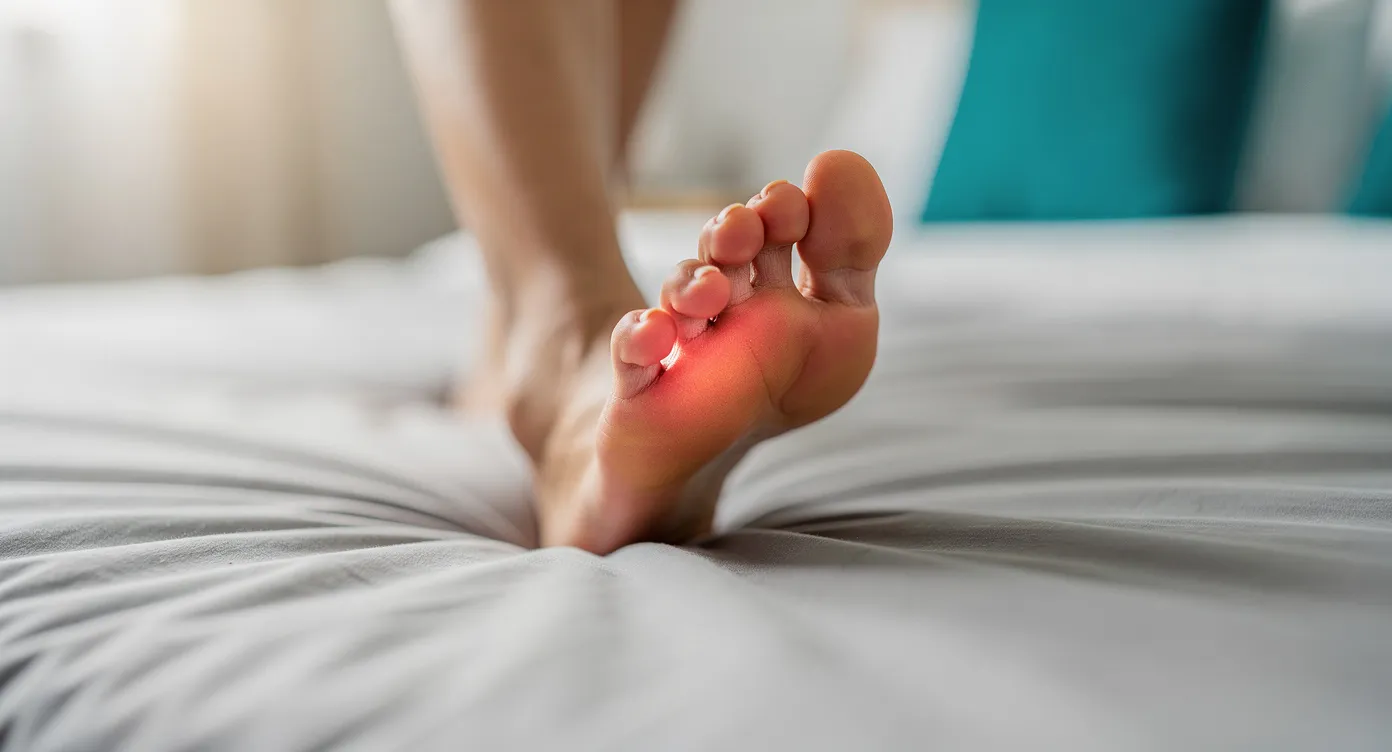
Doctors have a specific name for gout in the big toe: podagra. When it strikes, the pain often peaks within a few hours and can feel wildly out of proportion to the size of the joint. Many people describe it as burning, crushing, or like the toe is on fire. The skin over the joint may turn shiny and dark red, feel hot to the touch, and become so tender that walking is nearly impossible.
Gout isn't limited to the big toe, though. Over time it can affect the ankles, knees, heels, fingers, wrists, and elbows. But that first middle-of-the-night flare in the big toe is such a recognizable signature that it often points your provider toward the diagnosis before any testing is done.
"That first middle-of-the-night flare in the big toe is such a recognizable signature that it often points toward the diagnosis before any testing is done."
Recognizing the Symptoms of a Gout Attack
Gout attacks tend to arrive fast and hard. One of the hallmarks is how quickly the pain escalates, often reaching its worst within the first 12 to 24 hours. If you've never had one before, the speed and intensity can be alarming. The core gout symptoms usually include severe joint pain, visible swelling, redness that can look almost bruised, warmth over the joint, and a tenderness so extreme that light contact is agonizing.
Attacks frequently begin at night. Nobody knows exactly why, but lower body temperature during sleep, mild dehydration, and shifts in cortisol likely all play a role. A flare can last anywhere from a few days to a couple of weeks, and even without treatment it usually settles on its own. The problem is that once you've had one attack, more tend to follow, and the pain-free windows between them can shrink over time.
What Happens If Gout Goes Untreated
Left unmanaged over years, persistently high uric acid can lead to hard deposits of crystals called tophi that form lumps under the skin, often around the toes, fingers, or ears. Chronic gout can also cause lasting joint damage and is linked to kidney stones. This is why gout is best thought of not as a one-time event but as a long-term condition worth managing, much like other chronic conditions that benefit from ongoing management.
Foods and Triggers That Cause Gout
Because uric acid comes partly from the purines in your diet, certain foods and drinks can push your levels higher and set off a flare. Understanding your personal triggers is one of the most practical things you can do. The most common dietary culprits include organ meats like liver and kidney, red meat, shellfish and certain oily fish like anchovies and sardines, sugary drinks sweetened with high-fructose corn syrup, and alcohol, especially beer.
Beer deserves a special mention because it's both high in purines and interferes with how your kidneys clear uric acid, making it a double hit. Dehydration is another frequent trigger, which matters during Toronto's hot, humid summers and in the dry air of heated apartments through the winter. Crash diets, sudden weight loss, and even intense fasting can temporarily raise uric acid too.
Stress and poor sleep don't cause gout directly, but they can influence the inflammation and habits that surround a flare, and chronic stress often goes hand in hand with the kind of run-down state where attacks appear. If you find that tension is a recurring thread in your health, our piece on high-functioning anxiety and how it quietly wears you down is worth a read. It's also worth knowing that some medications, including certain diuretics and low-dose aspirin, can raise uric acid, which is one reason a full review of what you're taking matters.
Diagnosing gout usually requires blood work to check your uric acid level, and Care& offers on-premise lab work at our Yorkville clinic. That means your Nurse Practitioner can order the test, have it done in the same visit, and review your results with you through the Care& app without sending you across the city.
How Gout Is Diagnosed and Treated
Getting a proper diagnosis matters because a hot, swollen joint can have several causes, and gout is treated very differently from an infection or another type of arthritis. Your provider will typically start with a detailed history of your symptoms and a physical exam of the affected joint. Blood work to measure your uric acid level is a key part of the picture, though levels can sometimes read normal during an acute flare. In some cases fluid may be drawn from the joint to look for crystals directly, which is the most definitive test.
Treatment happens in two phases. The first goal is calming the acute attack and easing the pain. This usually involves anti-inflammatory approaches such as NSAIDs, colchicine, or a short course of corticosteroids, all taken as directed by your provider. Rest, elevating the joint, and applying ice can help while the medication works. The second phase, for people with recurring attacks, focuses on lowering uric acid over the long term with medications that either reduce production or improve clearance.
Alongside medication, lifestyle adjustments do a lot of the heavy lifting. Staying well hydrated, moderating alcohol, cutting back on high-purine foods and sugary drinks, and reaching a healthy weight gradually can all lower your risk of future flares. If you take other medications, your provider can help you choose options that won't cause interactions. And if you're pregnant, breastfeeding, or planning a pregnancy, check with your provider before starting any new medication, since several common gout treatments aren't appropriate during pregnancy.
A Note on Ongoing Management
Because gout tends to come back, the real win is a plan that keeps your uric acid in a healthy range so attacks become rare or stop entirely. That takes follow-up blood work, occasional medication adjustments, and a provider who knows your history rather than starting from scratch each visit. Seeing the same Nurse Practitioner over time makes this kind of steady, longitudinal care far easier. Men in particular sometimes ignore recurring aches until they interfere with daily life, a pattern we've written about in the context of pelvic pain in men and the causes that deserve attention.
Concerned about your symptoms? Your NP can help.
Meet Our NPsA hot, swollen joint accompanied by fever, chills, or feeling generally unwell can signal a joint infection, which is a medical emergency that needs treatment right away. Go to your nearest emergency department or call 911 if you have these symptoms, as an infected joint can cause permanent damage quickly and is not something to wait out at home.
When to See Your Nurse Practitioner
If you've had a sudden, severe attack of joint pain, especially in the big toe, it's worth getting assessed even if the flare has already settled. A first episode is the ideal moment to confirm whether it's gout, check your uric acid, rule out other causes, and put a plan in place before attacks become a recurring pattern. You should also seek care if flares are becoming more frequent, if you're noticing lumps under the skin, or if the pain isn't responding to the measures you've tried.
A family doctor covered by OHIP is a perfectly good route if you have one and can be seen within a reasonable timeframe. The reality across Toronto is that many people either don't have a family doctor or face long waits for an appointment, which is difficult when a gout flare has you unable to put on a shoe. Care& is a Nurse Practitioner-led Family Practice built for exactly this gap. It's a membership model that isn't covered by OHIP, offering unrushed appointments that start on time, a dedicated NP who gets to know your history, and on-site lab work so blood tests can happen during your visit.
Because gout is a long-term condition, that continuity is where the value shows up. Your NP can order the initial blood work, treat the acute flare, and then stay with you for follow-up as part of ongoing chronic disease management, adjusting your plan as needed. If you'd like to understand the membership and how visits work, our overview of how Care& works walks through the details, and busy professionals who want a more comprehensive relationship with their provider can explore our Executive Medicine option. Care mentioned here isn't a replacement for the emergency department when infection is a concern, but for diagnosing and managing gout, it's a practical path to timely, thorough care.
Frequently Asked Questions
How long does a gout attack usually last?
Most untreated gout attacks peak within the first day and then gradually resolve over roughly one to two weeks. With prompt anti-inflammatory treatment, the pain often eases much faster. If your flare drags on longer than two weeks or keeps returning, that's a signal to get assessed for a longer-term management plan.
What foods should I avoid if I have gout?
The biggest offenders are organ meats, red meat, shellfish and oily fish like sardines and anchovies, beer and other alcohol, and drinks sweetened with high-fructose corn syrup. You don't necessarily have to eliminate everything, but cutting back on these while staying well hydrated can meaningfully lower your risk of flares. A provider can help you build a realistic plan around your own triggers.
Can I get quick relief from a gout attack at home?
Resting the joint, elevating it, applying ice, and staying hydrated can all take some of the edge off while you wait to be seen. Over-the-counter anti-inflammatories may help, but they aren't safe for everyone, so it's best to confirm with a provider before relying on them. The most effective relief usually comes from a treatment tailored to you rather than a one-size-fits-all remedy.
Is gout something that runs in families?
Yes, genetics play a real role in how your body handles uric acid, so gout does tend to cluster in families. That said, diet, weight, alcohol, hydration, and certain medications all influence your risk on top of your genes. Knowing your family history is useful information to share when you get assessed. Gout in children is uncommon and managed differently, so a provider should guide any care for a child.
What if I don't have a family doctor in Toronto?
You're far from alone, and gout is very much manageable without waiting years for a family doctor. Care& is a Nurse Practitioner-led practice where you can be assessed, get the blood work done on-site, and start a treatment and follow-up plan with a dedicated NP who knows your history. It's a membership model not covered by OHIP, designed for people who want unrushed appointments and continuity of care with the same provider each visit.
Ready to prioritize your health?
Book an appointment with our experienced Nurse Practitioners today.
Book AppointmentOr call us at (647) 951-4770