In This Article
The Dermatologist Wait in Toronto
Ontario has a real shortage of dermatologists, and the numbers show it. Depending on the clinic and the reason for your visit, the wait between a referral and your first appointment can run anywhere from a few months to well over half a year. For something visibly changing on your skin, that gap feels agonizing. You end up refreshing your email, calling the office, and quietly wondering whether the thing on your arm is getting worse while you sit in the queue.
Here's the part most people don't realize. A large share of skin concerns never actually require a specialist. Common rashes, mild to moderate acne, eczema flares, fungal infections, and routine mole questions can often be assessed and managed at the family practice level. A Nurse Practitioner is trained to evaluate skin, treat the common conditions, and recognize the specific findings that do warrant a dermatologist. That last part matters most. The goal isn't to avoid specialists. It's to reach one only when you truly need one, and to get everything else handled far sooner.
To see where each option fits, compare them side by side.
What a Nurse Practitioner Can Handle
A Nurse Practitioner works to the full scope of a family practice provider, which covers a surprising amount of dermatology. When you come in with a skin complaint, your NP takes a proper history, examines the area, and forms an assessment the same way any primary provider would. From there, most of the everyday stuff can be treated right away rather than punted down a referral chain.
Acne is a good example. Mild to moderate acne responds well to topical retinoids, benzoyl peroxide, and in some cases oral antibiotics or hormonal treatment. Your provider can start a plan, review how your skin responds, and adjust over follow-up visits. Eczema and contact dermatitis are similar. A topical steroid, a solid moisturizing routine, and identifying the trigger often settle things without a specialist ever entering the picture. Fungal infections, minor bacterial infections, warts, mild rosacea, and many stubborn rashes fall into the same category.
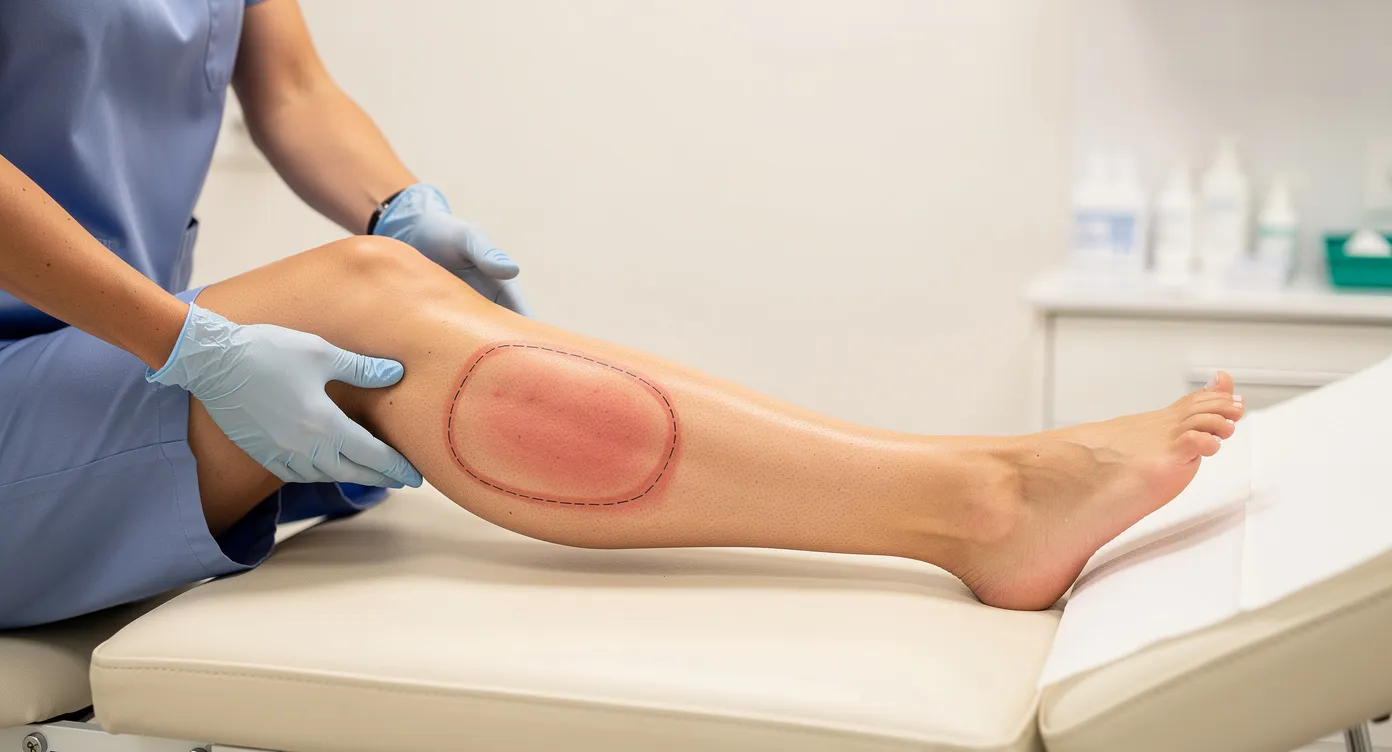
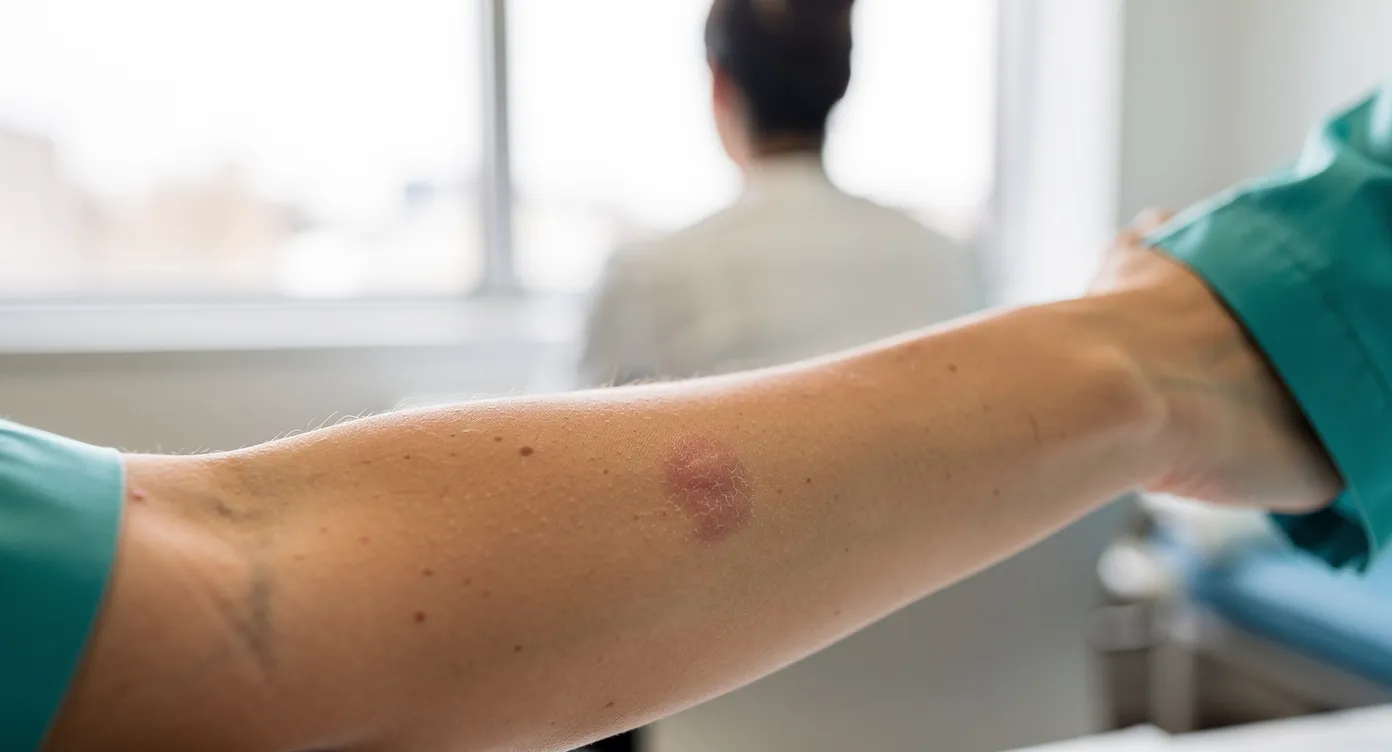
Then there are the questions that keep people up at night. A mole that changed shape, a spot that bleeds, a patch that won't heal. Your NP can examine it, walk you through the warning signs, and decide whether it's reassuring or whether it needs a specialist's eyes. If you want a plain-language primer before your visit, our guide to skin changes you shouldn't ignore breaks down what actually raises concern with moles, rashes, and lesions.
Skin rarely lives in isolation, either. Persistent flares can tie into stress, autoimmune conditions, or a chronic issue that needs ongoing attention. Having a provider who knows your full history means these dots get connected. The Nurse Practitioners at Care& approach skin as one piece of your overall health rather than a standalone complaint, which is part of why continuity with the same provider matters so much.
If your NP prescribes a cream or oral medication for a skin condition, Care& members can request refills with one click through the Care& app at app.careand.ca, and you see the same Nurse Practitioner at each follow-up so nobody has to relearn your history.
When You Genuinely Need a Specialist
None of this means dermatologists are optional extras. There are situations where their training, tools, and procedures are exactly what you need, and a good primary provider will get you there rather than trying to stretch beyond their scope.
A mole or lesion that carries features suggesting skin cancer needs a biopsy, and that's specialist territory. So is severe or scarring acne that hasn't responded to standard treatment, since options like isotretinoin require specialist oversight. Widespread psoriasis, moderate to severe eczema that isn't controlled by topicals, suspected autoimmune skin disease, and conditions that may need phototherapy or biologic medication all belong with a dermatologist. The same goes for anything requiring a procedure like excision, cryotherapy for certain lesions, or specialized cosmetic work.
The value of seeing your Nurse Practitioner first is that you skip the guessing. Instead of joining a months-long queue for something a topical cream would have fixed in three weeks, or worse, ignoring a genuinely worrying spot because the wait felt hopeless, you get an informed read on which path fits. When a specialist is warranted, your provider writes the referral with the clinical detail that helps you get triaged appropriately.
The safety net around your skin
Some skin issues aren't dermatology at all. A sudden spreading rash with fever, swelling, or difficulty breathing can signal a serious allergic reaction or infection. If you carry an epinephrine auto-injector (EpiPen), use it immediately and then call 911. Hives that appear alongside throat tightness or trouble breathing are an emergency, full stop. Your NP can help you understand your triggers and build a plan for the future, but the acute event needs emergency care first.
Concerned about your symptoms? Your NP can help.
Meet Our NPsHow Referrals Actually Work
People often assume they can call a dermatologist directly. In Ontario, most dermatology offices require a referral from a physician or Nurse Practitioner before they'll book you, and the quality of that referral affects how quickly you're seen. A referral that clearly documents the concern, the exam findings, and why the case is urgent moves differently than a vague one-liner.
This is where starting with your provider pays off. Your Nurse Practitioner can send a referral, and because the note is detailed and clinically grounded, it helps the receiving office triage you properly. In the meantime, your NP can begin managing symptoms so you're not just waiting empty-handed. If a biopsy or bloodwork is part of the picture, that can get arranged too. For a sense of how lab work fits without a traditional family doctor in the mix, our piece on getting bloodwork without a family doctor in Toronto covers the practical side.
If you've never used a membership-based practice before, the mechanics are straightforward. Our how it works page walks through booking, visits, and follow-up, and the whole flow is built so a skin concern becomes a booked appointment rather than an endless search. When ongoing conditions need steady attention, Care& also folds them into chronic disease management so nothing slips between visits.
When to See Your Nurse Practitioner
If you have a rash, acne, eczema, a fungal infection, or a mole you want checked, seeing a Nurse Practitioner first is a sensible starting point. You get a proper assessment, treatment for the common conditions, and a clear answer on whether a specialist is needed. If your concern turns out to require a dermatologist, you leave with a referral already in motion rather than a to-do list.
OHIP remains a real option here. If you have a family doctor and time on your side, a covered referral to a dermatologist costs you nothing but the wait. That works well for non-urgent issues where months of delay carry little risk. Where Care& fits is different. It's for people who can't find a family doctor, who don't want to sit months for a rash that's affecting daily life, or who simply value longer appointments with a provider who knows their history. Care& operates on a membership model and is not covered by OHIP. The trade is timely, unrushed access with the same Nurse Practitioner each visit, delivered through a modern family practice built around continuity.
Skin worries also have a way of wearing on you emotionally, especially when a visible condition drags on. If the stress is starting to affect your daily life, our reflection on the signs you need more than self-care is worth a read alongside treating the skin itself.
If you're pregnant, breastfeeding, or planning a pregnancy, check with your provider before starting any new medication, since several common acne and eczema treatments aren't suitable during pregnancy. Skin conditions in children can also present and respond differently than in adults, so pediatric care should be guided by a provider who can assess your child directly. And if you take other medications, your provider can help you choose options that won't cause interactions.
Frequently Asked Questions
Can I see a dermatologist in Toronto without a referral?
In most cases, no. Ontario dermatology offices typically require a referral from a physician or Nurse Practitioner before they'll book you, and a covered visit through OHIP generally depends on that referral. A small number of private cosmetic services operate differently, but for medical skin concerns a referral is the standard route.
How do I know if my mole needs urgent attention?
Watch for asymmetry, irregular borders, more than one colour, a diameter larger than a pencil eraser, or any change over time in size, shape, or sensation. A mole that itches, bleeds, or won't heal deserves prompt evaluation. A healthcare provider can examine it and decide whether a biopsy or specialist referral is warranted.
Can a Nurse Practitioner prescribe acne and eczema medication?
Yes. Nurse Practitioners can prescribe most topical and oral treatments for common skin conditions, including retinoids, topical steroids, and oral antibiotics, all taken as directed by your provider. Certain specialized therapies, like isotretinoin for severe acne, are managed by a dermatologist, and your provider will refer you when that level of care is appropriate.
What if I can't find a family doctor in Toronto?
You're far from alone, and it's a big reason many Torontonians are stuck without a first point of contact for skin concerns. Care& is a membership-based family practice, not covered by OHIP, where a dedicated Nurse Practitioner offers timely, unrushed appointments and can assess your skin, treat what's treatable, and refer you when a specialist is needed. It's an option for people who want continuity with the same provider rather than a rotating cast of walk-in clinics.
Ready to prioritize your health?
Book an appointment with our experienced Nurse Practitioners today.
Book AppointmentOr call us at (647) 951-4770