In This Article
The Reality of Walk-In Clinics in Toronto
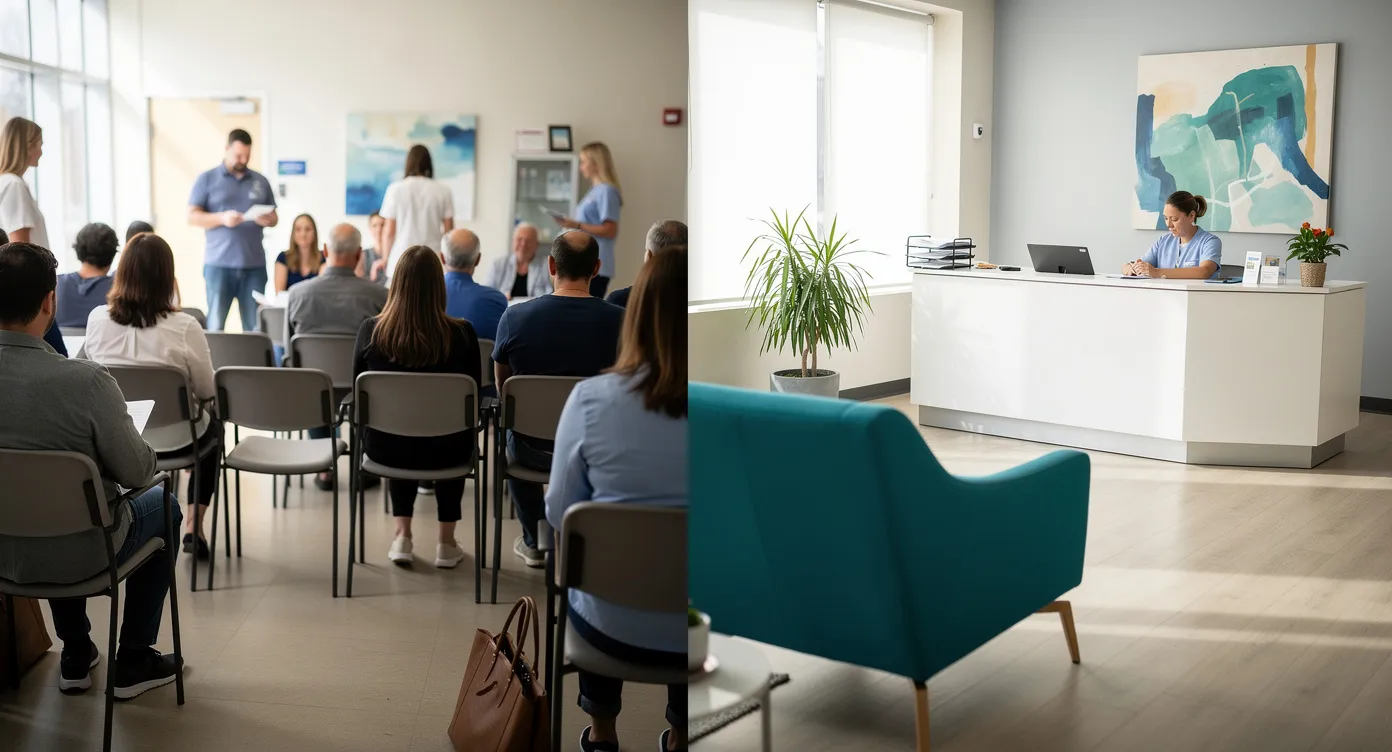
Walk-in clinics serve an important role in Toronto's healthcare landscape. When you don't have a family doctor and something comes up, a walk-in is often the only accessible option covered by OHIP. But if you've spent much time in one, you already know the trade-offs. Long waits, brief visits, and a provider who's meeting you for the very first time.
According to Ontario health workforce data, the province is short tens of thousands of family practice providers. Over a million Toronto-area residents don't have a regular family doctor or Nurse Practitioner. That means walk-in clinics are absorbing an enormous volume of patients who really need ongoing family practice, not just one-off visits for a sore throat or a prescription refill. The result is crowded waiting rooms and appointments that often feel rushed before you've finished explaining what's wrong.
Walk-in clinics are designed for episodic care. You come in with a single complaint, the physician addresses that complaint, and you leave. There's typically no mechanism for follow-up. No one reviews whether your blood pressure has trended upward over the past two years or whether the medication you started six months ago at a different clinic is still the right fit. That gap between what walk-ins provide and what you actually need from Family Practice has real consequences for your health.
The Hidden Costs of Fragmented Care
The sticker price of a walk-in visit looks appealing. If you have a valid Ontario health card, you don't pay out of pocket. But cost and value aren't the same thing. When you search "walk in clinic near me" on a Saturday morning, you're probably thinking about convenience and price. What you might not be calculating are the indirect costs that add up over months and years.
Duplicate Tests and Redundant Workups
Without a shared medical record, each walk-in provider starts from zero. You may end up with repeat blood work because the clinic you visited in January doesn't send records to the one you visited in May. Those duplicate tests cost the Ontario healthcare system money, but they also cost you time. Time off work to get blood drawn again. Time sitting in another waiting room. Time re-explaining your symptoms to yet another stranger in a white coat.
Missed Patterns and Delayed Diagnoses
Some conditions don't present with a single dramatic symptom. They reveal themselves slowly over multiple visits. Recurring headaches. Gradually worsening fatigue. Subtle changes in mood or digestion. A provider who sees you once has no baseline. They can't tell whether what you're describing today is new or part of something that's been building. In fragmented care, patterns get missed. And missed patterns can mean delayed diagnoses, especially for chronic conditions like diabetes, thyroid disorders, or hypertension.
The financial impact extends beyond the clinic. A condition caught early through consistent Chronic Disease Management is typically far less expensive to treat than one that's been developing unmonitored for years. Fewer emergency room visits. Fewer specialist referrals. Fewer complications that pull you away from your daily life. These hidden costs are what make fragmented walk-in care deceptively expensive over time.
"The cheapest visit isn't always the most affordable care. What matters is whether someone is connecting the dots on your health over time."
How a Nurse Practitioner Membership Works
A Nurse Practitioner membership model flips the walk-in approach on its head. Instead of paying per visit to see a different provider each time, you pay an annual fee and get a dedicated NP who knows your history, manages your care, and is available whenever you need them. It's the kind of relationship most people wish they had with a healthcare provider but can't find in Ontario's strained system.
At Care& Family Health, a membership costs $450 plus HST per year. That's not covered by OHIP, so it's worth being transparent about that upfront. In exchange, you get unlimited in-person, phone, and video visits with the same Nurse Practitioner. Your NP learns your history, understands your concerns, and builds a care plan that evolves with you. There's also a pay-per-visit option at $100 per appointment for those who prefer not to commit to a membership. You can see the full breakdown on the Membership Pricing page.
What makes this different from a walk-in isn't just the continuity. It's the appointment experience itself. Visits are unrushed. They start on time. You're not competing with a packed waiting room for your provider's attention. And because your NP sees you consistently, follow-up conversations are grounded in shared context rather than a blank intake form.
Care& members get access to on-premise lab work at our Yorkville clinic, plus real-time health records through the Care& app. That means your blood work, visit notes, and care plans all live in one place. No more chasing records from three different clinics.
Cost Comparison: Walk-In Visits vs. Membership
Let's look at the numbers honestly. If you're a healthy person in your twenties who visits a walk-in clinic once a year for a minor issue, the OHIP-covered walk-in is the more economical choice. There's no getting around that. A Care& membership makes more financial sense when your healthcare needs go beyond the occasional one-off visit.
When the Math Favours a Membership
Consider someone managing a chronic condition. Maybe you have hypothyroidism and need regular blood work and medication adjustments. Or you're navigating perimenopause and want to discuss symptoms over multiple visits. At Care&, your $450 annual membership covers every single one of those visits. There's no cap. If you need to come in six times, ten times, or more, the cost doesn't change.
Without a family doctor, the alternative is paying out of pocket at a private clinic in Toronto. Many charge $200 to $350 per visit. Even at the lower end, three visits in a year would cost more than a full Care& membership. And at a walk-in covered by OHIP, you'd get the visits at no charge. But you'd sacrifice continuity, time with your provider, and any guarantee that the person managing your thyroid medication today has any idea what was discussed at your last visit.
For families, the math shifts further. Parents with young children often need multiple appointments throughout the year. Ear infections, developmental check-ins, vaccination schedules, and the unpredictable illnesses that come with daycare. A family membership means every child and parent can see their provider as often as needed without worrying about per-visit costs. Care& also offers dedicated Pediatric Care as part of the membership.
What You're Actually Paying For
The membership fee doesn't just buy you visits. It buys you a healthcare relationship. One-click prescription refills through the app. A provider who remembers you were worried about a mole at your last visit and checks on it proactively. A care team that coordinates referrals and follows up on specialist reports. These are the things that OHIP-funded walk-in clinics structurally can't provide, not because the providers don't care, but because the system isn't built for it.
Want to see how Care& membership compares for your situation?
Meet Our NPsWhy Continuity of Care Changes Everything
The clinical evidence on continuity of care is overwhelming. Patients who see the same provider over time have better health outcomes, fewer emergency room visits, and higher satisfaction with their care. This isn't surprising when you think about it. A provider who knows your history doesn't need to start from scratch every time. They can spot changes early, adjust treatment plans proactively, and make decisions informed by months or years of context.
At a walk-in clinic, even the most skilled physician is working with incomplete information. They see a snapshot. Your Nurse Practitioner at Care& sees the full picture. They know which medications you've tried and stopped. They know your family history. They know that your "routine" headaches shifted in character three months ago. That kind of longitudinal awareness is where early interventions happen and where serious conditions get caught before they escalate.
The Mental Health Connection
Continuity matters especially for mental health. Anxiety, depression, and stress-related symptoms are among the most common reasons Torontonians visit walk-in clinics. But discussing your mental health with a stranger in a seven-minute appointment is difficult at best. Many people leave those visits with a prescription but no follow-up plan, no one checking in on how the medication is working, and no one asking whether things have improved.
A dedicated NP can track your mental health over time, adjust treatment thoughtfully, and create space for the kind of conversation that actually helps. If you take other medications, your provider can help you choose options that won't cause interactions. For anyone pregnant, breastfeeding, or planning a pregnancy, your NP can also ensure any medications prescribed are safe for your situation. These are nuanced conversations that don't happen in a walk-in setting.
Care& Family Health's clinic is in Yorkville at 162 Cumberland St, a three-minute walk from Bay Station. It's open Monday to Friday, 8 a.m. to 5 p.m., and offers on-premise lab work.
Neither a walk-in clinic nor a Nurse Practitioner membership replaces emergency care. If you're experiencing chest pain, difficulty breathing, signs of stroke (sudden facial drooping, arm weakness, slurred speech), severe allergic reactions, or uncontrolled bleeding, call 911 or go to your nearest emergency department immediately. If you carry an epinephrine auto-injector (EpiPen), use it immediately for anaphylaxis and then call 911.
When to See Your Nurse Practitioner
If you have an OHIP-covered family doctor you trust and can get appointments within a reasonable timeframe, that's a good foundation for your care. Not everyone needs a private membership. But if you're one of the many Toronto residents without a family doctor, or if you've found that your current provider can't see you for weeks, a Nurse Practitioner membership fills that gap in a meaningful way.
You should consider booking with your NP when you're dealing with a health concern that needs more than a quick walk-in assessment. Persistent symptoms that haven't resolved. A new medication that needs monitoring. Annual health assessments. Ongoing management of conditions like diabetes, high blood pressure, or mental health concerns. These are situations where seeing the same provider consistently leads to measurably better outcomes.
Care& is also a strong fit for families. Children's healthcare needs change rapidly, and pediatric management often requires close follow-up that walk-in clinics aren't structured to provide. Having a dedicated provider who tracks your child's growth, development, and immunization schedule brings a level of coordination that's hard to replicate in an episodic care model. To learn more about how the process works from your first appointment onward, visit the How It Works page.
Being transparent about costs matters. Care& is not covered by OHIP. But for Torontonians who've been cycling through walk-in clinics without anyone managing the bigger picture, a membership often represents not just better care but better value over the course of a year.
Frequently Asked Questions
Can a Nurse Practitioner do everything a family doctor does?
In Ontario, Nurse Practitioners can diagnose conditions, order and interpret lab tests, prescribe medications, and make specialist referrals. Their scope of practice covers the vast majority of family practice needs. For certain procedures or very specialized prescriptions, your NP will coordinate a referral to the appropriate specialist.
Are walk-in clinic visits really free in Ontario?
If you have a valid Ontario health card, basic walk-in clinic visits are covered by OHIP. However, many walk-in clinics charge extra fees for things like sick notes, insurance forms, or certain procedures. Some also charge for phone consultations or after-hours advice. The base visit is covered, but additional services may not be.
How many visits per year make a membership worthwhile?
From a pure dollar comparison, if you'd otherwise pay $100 or more per private clinic visit, five visits in a year would cost more than a typical annual membership. But the value isn't only in visit count. Continuity of care, proactive health monitoring, and the convenience of having a single provider who knows your full history are benefits that compound over time, even in years when you don't visit frequently.
Can I keep using walk-in clinics after joining a membership?
Yes. A Nurse Practitioner membership doesn't restrict you from using OHIP-covered services. If you need care outside your provider's hours or find yourself in a situation where a walk-in is the most accessible option, you can still go. The key difference is that you'll have a primary provider who can review what happened at the walk-in and integrate it into your ongoing care plan.
I can't find a family doctor in Toronto. What are my options?
You're not alone. You can register with Health Care Connect, Ontario's program for matching unattached patients with providers, though wait times can stretch to a year or more. Walk-in clinics remain an option for acute issues. For Torontonians who want consistent, relationship-based care, Care& Family Health offers membership-based family practice with a dedicated Nurse Practitioner. It's not covered by OHIP, but it provides the kind of ongoing care that walk-in clinics can't replicate.
Ready to prioritize your health?
Book an appointment with our experienced Nurse Practitioners today.
Book AppointmentOr call us at (647) 951-4770