
In This Article
Why Barbecues Can Spike Blood Sugar More Than You'd Expect
Grilled chicken and a salad sound perfectly diabetes-friendly on paper. So why do so many people with type 2 diabetes find their readings higher than expected after a weekend cookout? The answer usually isn't the protein on the grill. It's everything else on the table.
Classic barbecue sides are carbohydrate-dense in ways that aren't always obvious. Potato salad, baked beans, corn on the cob, white hamburger buns, coleslaw with added sugar, watermelon. Individually they seem harmless. Pile them all onto one plate and you can easily clear 80 to 100 grams of carbohydrates in a single sitting. That's before anyone brings out the lemonade.
Barbecue sauces and marinades are another hidden culprit. Many commercial sauces pack 8 to 12 grams of sugar per two-tablespoon serving, and most people use far more than two tablespoons. When you're basting ribs or brushing sauce onto chicken, the sugar adds up fast. Heat also caramelizes those sugars, which can create a false sense that you're eating something savoury rather than sweet. Understanding where the carbs hide is the first step to making better choices, and none of it requires giving up the grill.
The Protein-First Plate Strategy
The simplest blood sugar management strategy at any barbecue is to build your plate around protein and non-starchy vegetables first. Grilled meats, fish, and poultry are naturally carb-free. Start there, then add sides deliberately rather than scooping a bit of everything.
Best Proteins for the Grill
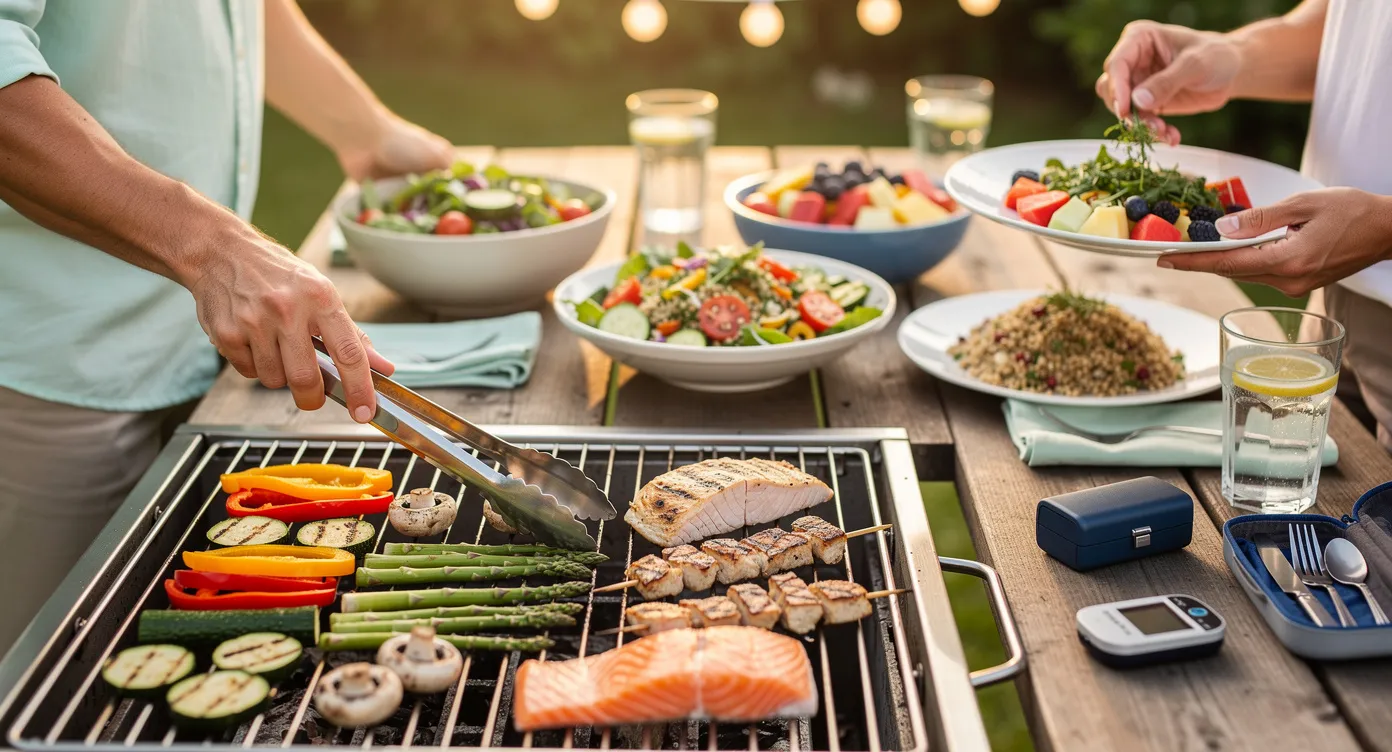
Chicken thighs and breasts, pork tenderloin, lean beef burgers, salmon fillets, shrimp skewers, and turkey burgers are all excellent choices that won't affect your blood sugar on their own. The key is what you put on them. A dry rub made from smoked paprika, garlic powder, cumin, and black pepper adds tremendous flavour with virtually zero carbs. If you love barbecue sauce, look for sugar-free versions or make your own using tomato paste, apple cider vinegar, mustard, and spices.
Eating protein before you reach for the starchy sides has a physiological benefit too. Research consistently shows that consuming protein and fat before carbohydrates slows gastric emptying, which blunts the post-meal glucose spike. So even if you do have a spoonful of potato salad, the timing matters. This one habit alone can make a measurable difference in your readings after a summer meal.
"Managing diabetes at a barbecue isn't about saying no to everything. It's about knowing what's on your plate and building it with intention."
Smarter Sides and Swaps That Actually Taste Good
You don't need a separate "diabetic plate" at the table. You just need better versions of the sides everyone loves. Grilled vegetables are your best friend here. Zucchini, bell peppers, asparagus, mushrooms, and eggplant all develop rich, smoky flavour on the grill while staying very low in carbohydrates. Toss them in olive oil and season with salt, pepper, and a squeeze of lemon.
If you're hosting the barbecue yourself, you have even more control. A Greek salad with cucumber, tomato, red onion, feta, and olives is a crowd-pleaser that's naturally low-carb. Cauliflower "potato" salad uses the same dressing as the classic version but replaces potatoes with steamed cauliflower. Most people can't tell the difference once it's dressed. For coleslaw, swap the sugary dressing for a tangy vinegar-based one with a touch of Dijon mustard.
The Bun Question
A standard white hamburger bun contains 25 to 30 grams of carbohydrates. You can switch to a lettuce wrap, use a low-carb tortilla, or simply eat your burger with a fork. If you really want a bun, try removing the top half. You still get the bread experience with roughly half the carbs. These small adjustments add up across the meal.
If you're managing type 2 diabetes, regular blood work helps you and your provider track how seasonal eating patterns affect your A1C over time. Care& members have access to on-premise lab work and can review results with the same Nurse Practitioner at every visit through our Chronic Disease Management program.
What to Drink (and How to Handle Dessert)
Summer beverages are often the biggest blind spot. A single can of regular pop contains about 40 grams of sugar. Sweetened iced tea, lemonade, and fruit punch can be even higher. A piña colada or frozen margarita? Easily 50 grams of carbohydrates per glass.
Sparkling water with a wedge of lime is the easiest swap. If you want something with more flavour, try infusing a pitcher of water with cucumber and mint, or muddling fresh berries with soda water. For alcohol, dry red or white wine and light beer are lower-carb options. A standard glass of dry wine has about 3 to 4 grams of carbs. Keep in mind that alcohol itself can affect blood sugar unpredictably. It may cause a delayed drop in glucose, especially if you take insulin or sulfonylureas. It's wise to monitor your levels more closely on days you drink and always eat something alongside your beverage.
A Smarter Approach to Dessert
You don't have to skip dessert entirely. Fresh berries (strawberries, blueberries, raspberries) are among the lowest-sugar fruits and pair beautifully with a small dollop of whipped cream. Grilled peach halves with a sprinkle of cinnamon taste indulgent while keeping your carb count moderate. Where you'll run into trouble is the brownies, pies, and ice cream sandwiches that tend to appear at Toronto summer parties. Having one small piece is fine for many people with diabetes. Having three is where the trouble starts. Decide before you approach the dessert table, not once you're standing in front of it.
Care& members get unlimited visits to manage ongoing conditions.
See Membership PricingHandling Social Pressure Without the Awkwardness
Maybe the toughest part of managing diabetes at a barbecue isn't the food. It's the people. The well-meaning aunt who insists you try her famous pecan pie. The friend who notices you're skipping the buns and asks if you're "on a diet." The host who takes it personally when you don't load up your plate.
You don't owe anyone a detailed medical explanation. A simple "I already had some, it was great" or "I'm pacing myself" tends to work in most situations. If you're comfortable being open about your diabetes, that's fine too. Most people are more understanding than you'd expect. But your blood sugar management is your business, and protecting it isn't rude.
One practical strategy is to bring a dish you know works for you. A big colourful salad, grilled vegetable platter, or protein-based appetizer gives you a safe option and contributes to the party at the same time. Nobody questions the person who brought food. If you're heading to a barbecue in Toronto's parks this summer (Trinity Bellwoods, High Park, the islands), packing your own cooler with pre-portioned snacks gives you even more control over what you eat.
Seasonal eating questions come up all the time during visits at Care&. Because our Family Practice model means you see the same NP every time, your provider already knows your medication history and dietary goals. That ongoing relationship makes nutritional guidance much more specific and useful than generic advice.
When to See Your Nurse Practitioner
Seasonal lifestyle changes are a natural time to check in with your healthcare provider. If your blood sugar has been consistently higher since barbecue season started, or if you're noticing patterns you can't explain, your Nurse Practitioner can help you figure out what's going on. Sometimes a medication adjustment is needed for the summer months. Sometimes it's a matter of tweaking your approach to carbohydrate timing.
If you don't currently have a family healthcare provider (and many Torontonians don't), or if you're waiting weeks for an appointment through your OHIP-covered clinic, Care& Family Health offers a membership model designed for exactly this kind of ongoing care. For $450+HST per year, you get unlimited visits with the same NP, on-premise lab work, and the kind of continuity that makes chronic disease management actually work. It's not covered by OHIP, but for people managing conditions like diabetes, having consistent access to a provider who knows your history can make a real difference in your outcomes.
You can also connect with your Care& NP through Virtual Care if a question comes up after a weekend barbecue and you want guidance before your next in-person visit. If you take other medications alongside your diabetes treatment, your provider can help you choose food and drink options that won't cause interactions.
Frequently Asked Questions
Can I eat corn on the cob if I have diabetes?
Yes, but be mindful of the portion. One medium ear of corn has about 20 to 25 grams of carbohydrates. If you're eating corn, you may want to skip the bun or other starchy sides on your plate. Pairing it with a protein-heavy meal can help blunt the glucose response.
Does hot weather itself affect blood sugar levels?
It can. Extreme heat affects how your body uses insulin, and dehydration can concentrate blood glucose. If you're spending long hours outdoors at a Toronto summer gathering, drink plenty of water and check your blood sugar more frequently than you normally would. Store your insulin and testing supplies out of direct sunlight, as heat can degrade them.
Is it safe to drink alcohol at a barbecue if I have type 2 diabetes?
Moderate alcohol consumption is generally considered acceptable for most adults with type 2 diabetes, but it comes with caveats. Alcohol can cause delayed hypoglycemia, especially if you take insulin or certain oral medications. Always eat food alongside your drink, choose lower-carb options like dry wine or light beer, and monitor your blood sugar afterward. Talk to your healthcare provider about how alcohol interacts with your specific medication regimen.
What if my family doctor doesn't have availability for weeks and I need to adjust my diabetes management?
This is a common frustration in Ontario, especially during the summer when many clinics reduce hours. Care& Family Health offers a membership that includes unlimited visits with the same Nurse Practitioner. Because your NP already knows your diabetes history and current medications, you can get informed guidance without starting from scratch. It's not covered by OHIP, but for people managing a chronic condition, the continuity and accessibility can make ongoing management significantly easier.
Ready to prioritize your health?
Book an appointment with our experienced Nurse Practitioners today.
Book AppointmentOr call us at (647) 951-4770