Yes, Bad Sleep Directly Lowers Your Testosterone
The relationship between testosterone and sleep is one of the most well-established findings in men's hormone health. Your body produces the majority of its daily testosterone during deep sleep, particularly during the first uninterrupted stretch of the night. When that sleep is fragmented, shortened, or poor quality, testosterone production drops significantly. Research consistently shows that men who sleep five hours per night instead of eight can see testosterone levels fall by 10 to 15 percent. That's roughly equivalent to aging 10 to 15 years hormonally.
This matters because the symptoms of sleep deprivation and low testosterone overlap almost perfectly. Fatigue, irritability, brain fog, reduced libido, difficulty building muscle, weight gain around the midsection. You might assume hormones are the root cause when the real issue is that you haven't had a solid night of rest in months. Or it could be both, with poor sleep creating a hormonal deficit that then makes sleep even worse. Either way, sorting out the chicken-and-egg question requires looking at both sides, and that's something a Nurse Practitioner at Care& can help you work through with lab panels and a careful history.
The Vicious Cycle Between Sleep and Hormones
Poor sleep doesn't just lower testosterone. Low testosterone can also disrupt sleep. Men with declining testosterone levels are more likely to develop sleep disturbances, including difficulty staying asleep and reduced time in deep, restorative sleep stages. Testosterone influences the regulation of cortisol, your body's primary stress hormone. When testosterone dips, cortisol tends to stay elevated later into the evening, making it harder to fall asleep and easier to wake at 3 a.m. with a racing mind.
This cycle feeds on itself. A few bad nights lower your testosterone. Lower testosterone makes the next few nights worse. Over weeks and months, you end up with chronically suppressed hormones and chronically broken sleep, and it becomes genuinely difficult to know which problem came first. That's why a proper assessment matters so much. Your provider needs to evaluate your sleep patterns, stress levels, overall health, and actual hormone levels before jumping to conclusions about what's driving your symptoms.
Obstructive Sleep Apnea: The Hidden Factor
One commonly overlooked piece of this puzzle is obstructive sleep apnea. Men carrying extra weight around the neck and midsection are at higher risk, and sleep apnea is strongly associated with lower testosterone levels. You might think you're sleeping seven or eight hours, but if apnea is waking you dozens of times per hour, you're never reaching the deep sleep stages where testosterone production peaks. If your partner has noticed snoring, gasping, or pauses in your breathing, mention it to your NP. Screening for sleep apnea can be a straightforward first step, and treating it often improves testosterone levels without any other intervention.
Care& Family Health has on-premise lab work at our Yorkville clinic, so your NP can order a full hormone panel and review results with you during the same visit cycle. No separate lab requisition to chase down. You can track all your results in real time through the Care& app.
How to Raise Testosterone Naturally Through Better Sleep
Before exploring any hormonal treatments, fixing your sleep is the single most effective natural strategy to support healthy testosterone levels. The good news is that sleep improvements often produce measurable hormonal changes within just a few weeks. Here's where to start.
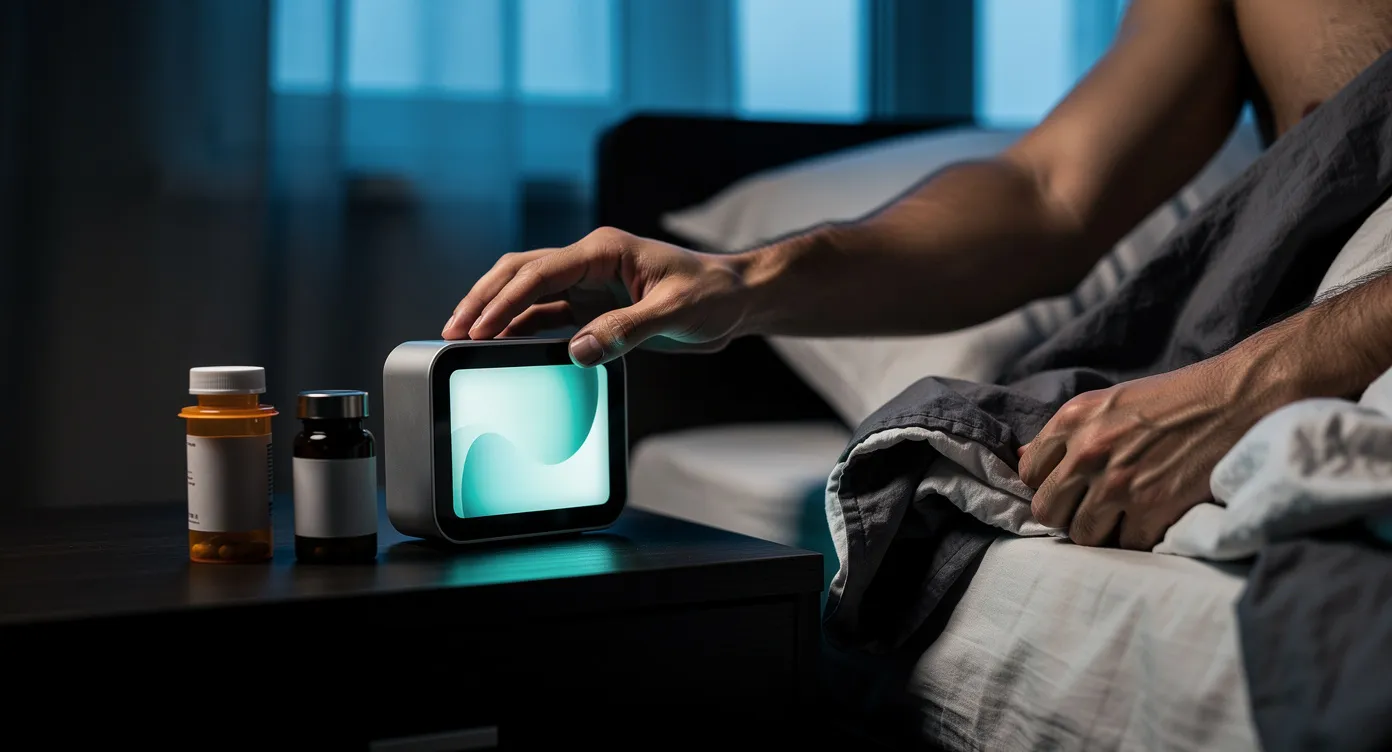
Protect your sleep window. Aim for seven to nine hours of actual sleep, not just time in bed. Set a consistent bedtime and wake time, even on weekends. Testosterone production follows a circadian rhythm, and your body rewards consistency. Cut the screens. Blue light from phones and laptops suppresses melatonin, the hormone that signals your brain to initiate sleep. Stop screens at least 45 minutes before bed. Watch the evening alcohol. A drink or two might make you fall asleep faster, but alcohol fragments sleep architecture and suppresses deep sleep. Even moderate drinking within three hours of bedtime can reduce overnight testosterone production. Keep the room cool and dark. Your body needs to drop its core temperature to enter deep sleep. A room between 18 and 20 degrees Celsius is ideal for most men. Get morning light. Bright natural light within 30 minutes of waking reinforces your circadian rhythm, which strengthens the sleep-wake cycle that testosterone depends on.
Exercise plays a role too. Resistance training and moderate cardiovascular exercise both support healthy testosterone levels, but timing matters. Intense workouts within two to three hours of bedtime can elevate cortisol and core body temperature enough to impair sleep quality. Morning or midday training tends to be more supportive of both goals.
Concerned about your energy, mood, or hormones? Your NP can help assess what's going on.
Meet Our NPsWhen Sleep Alone Isn't Enough
Sometimes improving sleep habits produces noticeable results within weeks. But when you've genuinely committed to better sleep for two to three months and still feel flat, a deeper look at your hormone levels is warranted. Your Nurse Practitioner can order bloodwork that includes total testosterone, free testosterone, SHBG, LH, FSH, thyroid function, and other markers that paint a fuller picture. Low testosterone can have causes beyond sleep, including certain medications, chronic stress, pituitary issues, or metabolic conditions.
If you take other medications, your provider can help you identify whether any of them are contributing to sleep disruption or hormonal changes. And if you're considering supplements marketed as testosterone boosters, it's worth discussing that with your NP first. Most over-the-counter testosterone supplements have limited evidence behind them, and some can interact with other medications or mask symptoms that deserve a proper workup. The Men's Health services at Care& are designed for exactly these kinds of conversations.
When to See Your Nurse Practitioner
If you've been experiencing persistent fatigue, low libido, mood changes, or difficulty concentrating for more than a few weeks, it's worth getting a proper evaluation. These symptoms can stem from hormonal changes, sleep disorders, thyroid issues, or mental health conditions, and they deserve more than a five-minute conversation. Care& Family Health isn't covered by OHIP, but the membership model gives you unrushed appointments with the same NP who knows your full history. That kind of continuity matters when you're untangling something like the sleep-testosterone cycle, where follow-up visits and repeat labs are part of the process. You can also explore Care&'s Sexual Health services if concerns around libido or sexual function are part of the picture.
Frequently Asked Questions
How quickly can better sleep improve testosterone levels?
Most men who consistently improve their sleep duration and quality can see measurable changes in testosterone levels within two to four weeks. The first things you'll likely notice are improvements in energy and mood, with hormonal markers following on lab work. Full hormonal recovery from chronic sleep deprivation can take several months.
Does napping help with testosterone production?
Short naps of 20 to 30 minutes can partially offset the effects of a poor night's sleep, and some evidence suggests they modestly support hormonal recovery. However, napping doesn't replace consistent overnight sleep, which is when the bulk of testosterone is produced. Long naps late in the day can also interfere with nighttime sleep quality, making the underlying problem worse.
Where can I find a provider in Toronto who takes men's hormone concerns seriously?
Many men feel rushed or dismissed when raising hormone concerns in brief appointments. Care& Family Health offers a family practice model where your Nurse Practitioner has the time for thorough, judgment-free conversations about energy, libido, mood, and sleep. At our Yorkville clinic, you'll see the same NP at every visit, which makes ongoing hormone monitoring and follow-up straightforward. The clinic isn't covered by OHIP, but memberships start at $450 plus HST per year for unlimited visits.
Ready to prioritize your health?
Book an appointment with our experienced Nurse Practitioners today.
Book AppointmentOr call us at (647) 951-4770