Which Mole Changes Actually Warrant a Check
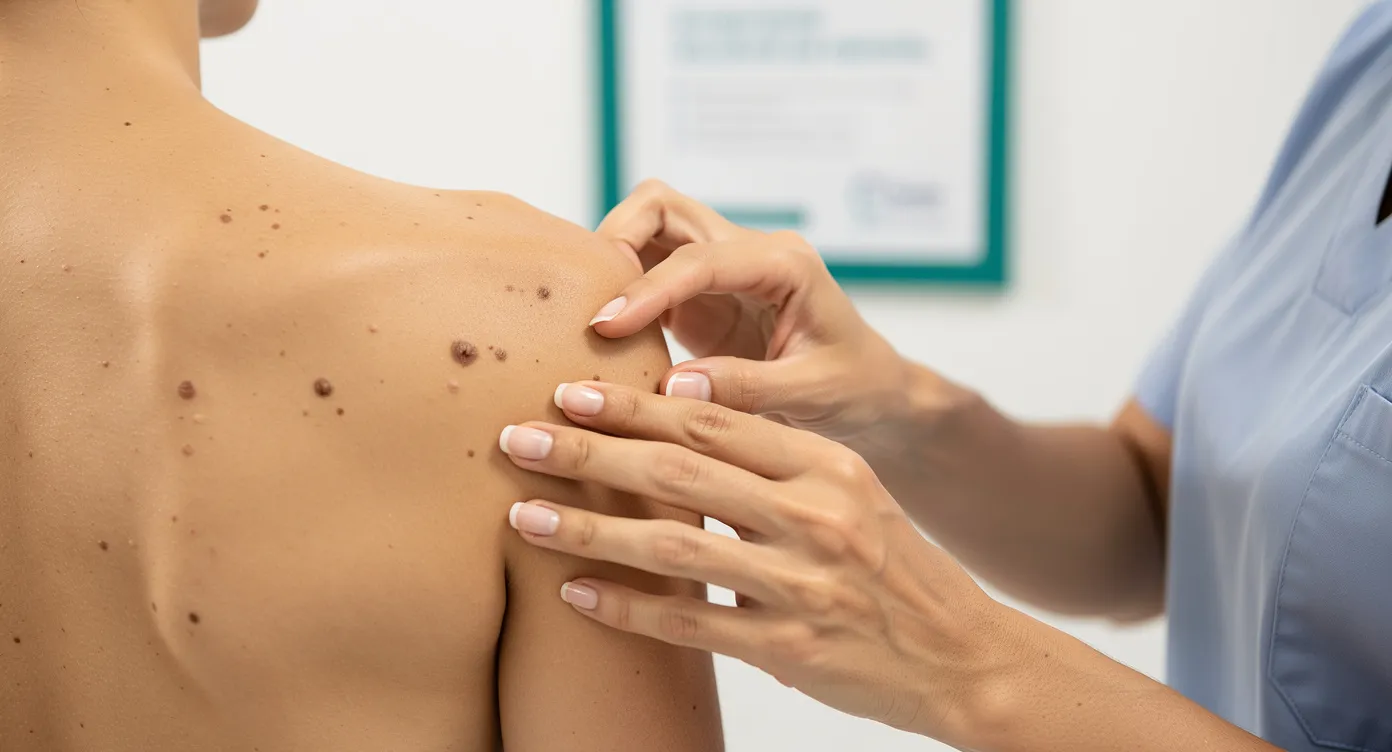
A mole is worth getting looked at when it changes. The most reliable framework for spotting a concerning mole is the ABCDE method, and it takes about thirty seconds to run through. You're watching for Asymmetry (one half doesn't match the other), Border irregularity (edges that are ragged, notched, or blurred), Colour that varies within the same spot (shades of brown, black, red, white, or blue), Diameter larger than about 6 millimetres (roughly the width of a pencil eraser), and Evolving, meaning any change in size, shape, colour, or elevation over weeks to months.
A new mole that appears in adulthood, a spot that itches or bleeds without an obvious cause, or a mole that simply looks different from all your others deserves a professional assessment. That last one has a nickname among clinicians. The "ugly duckling" sign describes a spot that stands out from the crowd on your skin. Most of your moles tend to resemble each other, so the one that breaks the pattern is the one to flag.
The reassuring part is that the vast majority of moles are completely harmless, and having one assessed doesn't mean you have skin cancer. It means you're being sensible. When a spot does turn out to be concerning, catching it early makes an enormous difference, which is exactly why a post-summer skin check is a habit worth building.
Why Sun Season Raises the Stakes
Ultraviolet radiation is the single biggest modifiable risk factor for melanoma and other skin cancers, and a Canadian summer delivers plenty of it. Even on cloudy days, and even for people who rarely burn, cumulative sun exposure adds up. A few blistering sunburns in your lifetime, especially during childhood, further raise your risk. So does a personal or family history of skin cancer, fair skin that freckles or burns easily, and having a large number of moles.
The end of summer is a natural checkpoint because your skin has just absorbed months of UV, and any changes triggered over the season may start becoming visible now. Making this an annual ritual, tied to the changing seasons, means you're far more likely to notice the subtle shifts that matter.
If you spot something that concerns you, you can snap a photo and bring it to a video or in-person visit with your Care& Nurse Practitioner. Because your membership includes unlimited visits, there's no reason to wait and wonder. Your provider can examine the spot, document it in the Care& app, and track any changes over time against your own health record.
How to Do a Skin Self-Exam at Home
A thorough self-exam works best in a well-lit room with a full-length mirror and a smaller handheld mirror. Start at your scalp and work downward, checking your face, ears, neck, and chest. Move to your arms, including the undersides and between your fingers, then your torso, back, and buttocks using the handheld mirror. Finish with your legs, the soles of your feet, and the spaces between your toes. These easy-to-miss areas matter, because melanoma can appear on skin that rarely sees the sun.
Taking dated photos of any moles you want to monitor is one of the simplest ways to catch change. A spot you see every day can shift so gradually that you don't register it, but a photo from three months ago tells the truth instantly. If you have a mole in a spot you can't easily see, ask a partner to help or bring it up at your next visit with your provider.
Doing this a few times a year builds a mental map of what's normal for your skin. Once you know your baseline, the ugly duckling becomes much easier to spot. If you're managing other ongoing health conditions, folding a skin check into your regular chronic disease management visits keeps everything under one roof with a provider who already knows your history.
What Counts as an Emergency Versus a Check-Up
Skin changes almost never constitute a medical emergency, so you generally have time to book a proper appointment rather than rushing to an ER. That said, a spot that's rapidly growing, bleeding persistently, or not healing should be assessed promptly rather than left for months. When in doubt, an unhurried appointment with a Nurse Practitioner who can actually look at the spot and talk through your risk factors is the right next step.
Skin checks matter for children too, though pediatric moles behave differently and new spots are common as kids grow. For any concern about a child's skin, have it evaluated by a provider who can assess it in the context of their age and development.
Annual check-ups with your own NP, every year.
See Membership PricingWhat Happens After You Flag a Spot
When you bring a concerning mole to your Nurse Practitioner, the visit usually starts with a close look at the spot and the surrounding skin, sometimes with a handheld magnifier called a dermatoscope. Your provider will ask about how long it's been there, whether it's changed, and your personal and family risk factors. Based on that assessment, they'll either reassure you that the spot looks benign and suggest monitoring, or arrange a referral to a dermatologist for further evaluation or a biopsy.
At Care&, that referral pathway is part of what your membership covers. Your Nurse Practitioner can order the appropriate follow-up and coordinate the specialist referral when it's warranted, then keep your records updated so nothing falls through the cracks. If you've been searching for a Family Practice that gives you unhurried time to actually raise these worries, this is the kind of concern that benefits from a provider who knows your skin from one year to the next.
When to See Your Nurse Practitioner
Book an assessment if a mole meets any of the ABCDE criteria, if a new spot has appeared in adulthood, or if something itches, bleeds, or simply looks different from the rest of your skin. In Ontario, a walk-in clinic or an OHIP family doctor can assess moles too, but many Toronto residents don't have a family doctor or face long waits to be seen. Care& is not covered by OHIP. It's a membership option for people who want a dedicated provider, longer appointments, and a modern app-based experience. You can see exactly how the model works on our How It Works page.
Frequently Asked Questions
Is a new mole after summer always a sign of skin cancer?
No. New moles can appear throughout life, and most are harmless. What matters is whether the spot has irregular features, changes over time, or looks different from your other moles. A new mole that appears in adulthood is worth having assessed, but it's far more likely to be benign than not.
Can wearing sunscreen reverse damage already done to my moles?
Sunscreen can't undo past UV exposure, but it meaningfully reduces future risk. Using a broad-spectrum SPF 30 or higher, reapplying every two hours outdoors, and adding hats and shade lowers your cumulative exposure going forward. That protection matters at every age, so it's never too late to start.
How often should I get a check-up if I don't have a family doctor?
A general health review once a year is a reasonable target for most adults, with skin checks folded in. If you don't have a family doctor, a Care& membership gives you a dedicated Nurse Practitioner and unlimited visits so preventive care doesn't get postponed. You can review the details on our Membership Pricing page.
Ready to prioritize your health?
Book an appointment with our experienced Nurse Practitioners today.
Book AppointmentOr call us at (647) 951-4770