In This Article
Why Kidney Stones Spike Every Summer
Kidney stones follow a seasonal pattern that's remarkably consistent year after year. Cases climb as temperatures rise, peaking during the warmest months. In a city like Toronto, where winter lows can dip well below zero and summer highs push past 35°C with heavy humidity, your body's fluid balance takes a real hit between June and September.
The connection is simple to understand. When you sweat more, you lose water. When you lose water without adequately replacing it, your urine becomes more concentrated. That concentrated urine creates the ideal environment for minerals like calcium and oxalate to crystallize together with uric acid, forming solid deposits. Some of those deposits are tiny enough to pass without you ever noticing. Others grow large enough to block the ureter and trigger the kind of pain that sends people to the emergency department.
Toronto's humidity adds a layer of risk that's easy to underestimate. You don't need to be training for a marathon to lose meaningful amounts of fluid. A morning commute on a packed TTC subway car, a walk through Yorkville, or a few hours on a restaurant patio can leave you more dehydrated than you'd guess. Your skin loses moisture constantly in humid conditions, even when you're sitting still. If your daily water intake hasn't adjusted for the season, your kidneys are paying the price. That slow, invisible shift in your body's fluid balance is exactly what makes summer kidney stones so predictable.
How Dehydration Leads to Stone Formation
Your kidneys filter roughly 150 litres of blood every day, producing about 1 to 2 litres of urine. That urine carries dissolved waste products, including calcium, oxalate, phosphorus, and uric acid. When you're properly hydrated, these substances remain dissolved and pass out of your body without incident. When you're dehydrated, their concentration rises and they begin to crystallize.
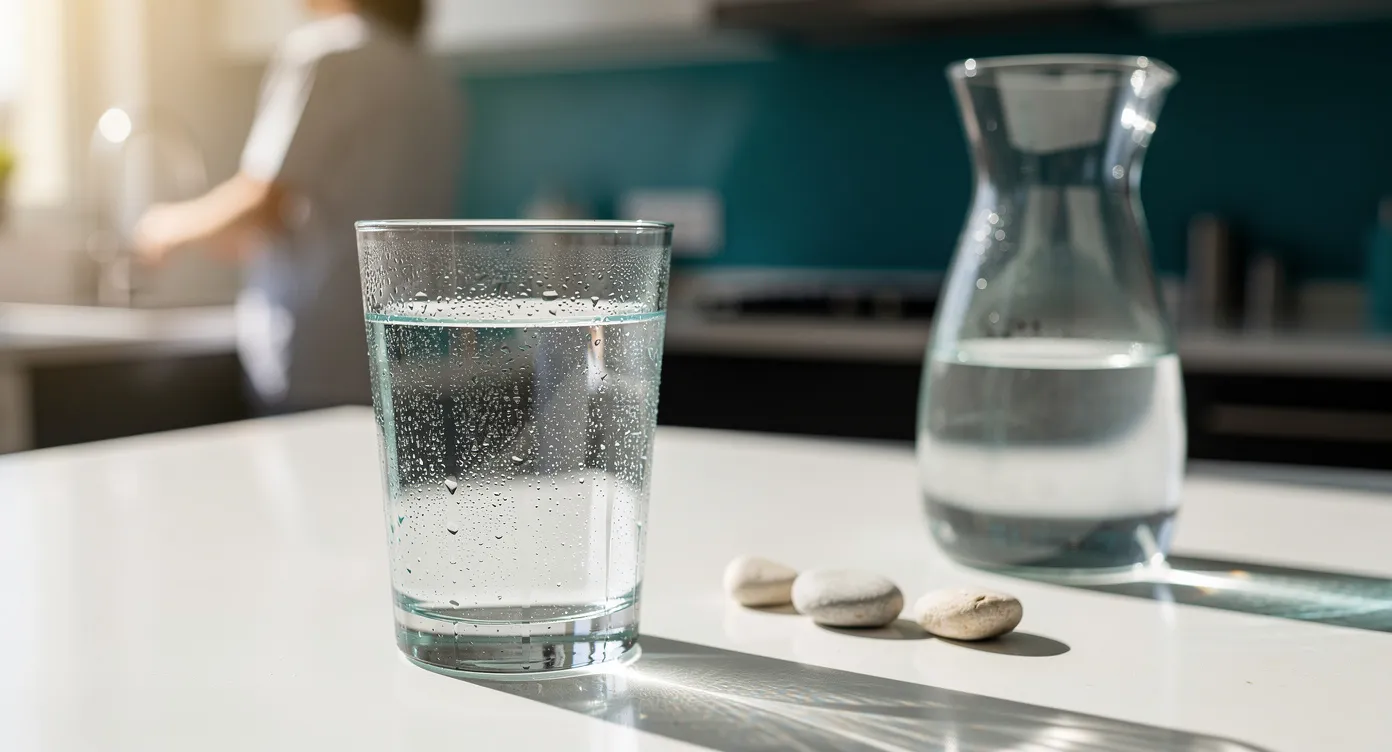
A simple analogy helps here. A glass of water can dissolve a certain amount of salt. Keep adding salt without adding more water, and eventually crystals start forming at the bottom of the glass. Your kidneys work on the same principle. Less fluid means less solvent for all those dissolved minerals. Instead of flushing out cleanly, those minerals begin binding together into solid deposits that grow over time.
There are several types of kidney stones, and dehydration contributes to nearly all of them. Calcium oxalate stones are the most common, accounting for roughly 80% of cases. Uric acid stones rank second and are particularly linked to dehydration paired with diets high in animal protein. Struvite and cystine stones are less common and often involve distinct underlying causes, but even these form more readily when urine is concentrated.
One detail that catches many people off guard: you don't have to feel dehydrated to be at risk. No dizziness, no cracked lips, no obvious thirst. Mild, chronic under-hydration over weeks and months is enough to shift your urine chemistry toward stone formation. This slow build is what makes kidney stones feel like they come out of nowhere, when in reality they've been developing quietly for a long time.
"If your urine is consistently dark yellow rather than pale straw, you're probably not drinking enough water to keep kidney stones at bay."
Why Men Are Nearly Twice as Likely to Be Affected
Kidney stones affect men at roughly double the rate of women. The lifetime risk for men falls somewhere between 10 and 15 percent, compared to about 5 to 10 percent for women. Several biological and behavioural factors drive this gap.
Men tend to have higher muscle mass, which produces more creatinine and uric acid as metabolic byproducts. Higher testosterone levels are also linked to increased oxalate production in the liver, which means more stone-forming material reaching the kidneys. Dietary patterns play a role as well. On average, men consume more animal protein and more sodium than women, both of which are well-established risk factors for stone formation.
There's also a straightforward behavioural element. Men consistently drink less water relative to their body size and physical activity. They're also less likely to adjust their intake when the weather heats up. If you're a man living in Toronto and your summer hydration habit looks identical to your winter one, there's a good chance you're falling short of what your kidneys actually need.
The risk climbs with age, peaking between 30 and 60. And if you've already had one kidney stone, your chance of forming another within five years is around 50 percent. That statistic alone makes prevention worth taking seriously. A Nurse Practitioner at Care& can help you evaluate your individual risk factors and build a men's health prevention plan that accounts for your diet, your habits, and what your lab results reveal. Understanding your risk profile now is far better than dealing with a recurrence later.
Kidney Stone Symptoms You Shouldn't Ignore
The hallmark symptom of a kidney stone is pain. It typically begins as a dull ache in the flank or lower back and can rapidly sharpen into intense, wave-like cramping known as renal colic. Many patients describe it as one of the most severe pains they've ever experienced. It often radiates from the back down to the groin, coming and going in waves as the stone moves through the ureter.
Beyond the pain, watch for these accompanying symptoms:
- Blood in the urine (hematuria), which may appear pink, red, or brown
- Nausea and vomiting
- A persistent urge to urinate, sometimes with only small amounts passing
- Pain or burning during urination
- Cloudy or unusually foul-smelling urine
- Fever and chills, which may signal an accompanying infection
Some men initially attribute kidney stone symptoms to a pulled muscle, a digestive issue, or a urinary tract infection. Blood in the urine sometimes raises worry about other urological or sexual health conditions, but your provider can help determine whether a kidney stone is the more likely explanation. The intensity of symptoms often depends on the stone's size and location. Smaller stones may produce mild discomfort or no symptoms at all. Larger ones can be debilitating.
Go to your nearest emergency department or call 911 if you experience severe pain you cannot manage at home, a fever above 38°C (100.4°F) with flank pain (which may indicate infection), complete inability to urinate, or persistent vomiting that prevents you from keeping fluids down. A kidney stone with infection (obstructive pyelonephritis) is a medical emergency requiring urgent treatment.
Preventing Kidney Stones: Hydration, Diet, and Bloodwork
Prevention is where you have the most control, whether you've already passed a stone or you simply want to keep your risk low. The strategy comes down to hydration and dietary adjustments, backed by targeted bloodwork to identify your specific metabolic risk factors.
Hydration Is Your First Line of Defence
The single most effective step you can take is drinking more water. The clinical goal is to produce at least 2 to 2.5 litres of urine per day, which typically requires consuming about 2.5 to 3 litres of fluid. During a Toronto summer, you'll likely need more than that. Carry a refillable bottle. Set reminders on your phone if it helps. Monitor the colour of your urine throughout the day. Pale yellow is the target. Clear is fine. Dark yellow means you need to drink more.
Water is the best choice, but coffee, tea, and citrus juices (particularly lemon) are reasonable additions. Lemon juice contains citrate, which can help prevent calcium-based stones from forming. Limit sugary beverages and be mindful of alcohol, which contributes to dehydration even in moderate amounts.
Dietary Adjustments That Reduce Risk
Sodium is a major driver of calcium excretion into the urine. Reducing your intake to under 2,300 mg per day can meaningfully lower your stone risk. In practical terms, that means watching processed foods, restaurant meals, and pre-packaged snacks, which tend to be loaded with hidden sodium.
Animal protein, especially red meat, increases uric acid production and decreases urinary citrate, a natural stone inhibitor. You don't need to give up meat entirely. Moderating your portions and increasing your fruit and vegetable intake can shift the balance in the right direction.
One widespread misconception deserves correcting: you should not drastically cut calcium from your diet. Dietary calcium actually binds to oxalate in the gut and prevents it from being absorbed into your bloodstream. Low-calcium diets can paradoxically increase stone risk. The key is getting calcium from food rather than supplements, and eating calcium-rich foods at the same meals as oxalate-rich ones like spinach or almonds.
If you're pregnant, breastfeeding, or planning a pregnancy, talk to your healthcare provider before making major dietary changes or starting new supplements. Some approaches to stone prevention may not be appropriate during pregnancy. If you take other medications, your provider can help you choose prevention strategies that won't cause interactions with your current prescriptions.
Bloodwork and Follow-Up Testing
If you've had a kidney stone before, bloodwork can reveal the metabolic issues driving stone formation. A basic metabolic panel can identify elevated calcium, uric acid, or other markers that point to a specific stone type and guide targeted prevention. Your Nurse Practitioner can order these tests and walk you through the results, explaining what each number means for your individual risk.
Kidney stones in children are less common than in adults, but they do occur, particularly in adolescents. Pediatric management differs in important ways, so if your child develops symptoms, consult their healthcare provider rather than applying adult guidelines.
At Care& Family Health, lab work is done on-site at our Yorkville clinic. That means your NP can order kidney stone prevention bloodwork and you can get it drawn during the same visit. No separate lab appointment needed.
Concerned about kidney stone symptoms or prevention? Your NP can help.
Meet Our NPsWhen to See Your Nurse Practitioner
Not every kidney stone requires an ER visit. Many small stones, those under about 5mm, pass on their own with adequate hydration and pain management over a few days to a couple of weeks. But you shouldn't be managing this without professional guidance, especially if it's your first episode or your symptoms are severe.
Your Nurse Practitioner can evaluate your symptoms, order imaging or lab work to confirm what's happening, and help you manage discomfort while the stone passes. If the stone turns out to be too large to pass on its own, your provider can refer you to a urologist for procedures like shock wave lithotripsy or ureteroscopy.
The real value of having a primary care provider involved goes beyond the acute episode, though. Your provider can build a prevention plan that includes regular bloodwork to monitor metabolic risk factors, dietary guidance tailored to your specific stone type, and follow-up to confirm your kidneys are functioning well afterward. This kind of ongoing care matters most for people who've already had one stone, given that 50 percent recurrence rate.
If you have an OHIP-covered family doctor, they can certainly help with kidney stone management and follow-up. But if you're struggling to get a timely appointment, if your visits feel too rushed to address prevention properly, or if you don't currently have a family doctor at all, Care& Family Health offers Family Practice with unrushed appointments and a dedicated NP who knows your full history. Membership is not covered by OHIP, but it includes unlimited visits, on-site lab work, and true continuity with the same provider every time. You can learn more about how it works on our website.
Care& members get continuity of care with the same Nurse Practitioner at every visit. That means your NP already knows your history, your risk factors, and any previous stone episodes. No repeating your story. No starting from scratch.
Frequently Asked Questions
How much water should I drink in summer to prevent kidney stones?
Aim for at least 2.5 to 3 litres of fluid per day during summer months, and more if you're exercising or spending time outdoors. The clinical goal is to produce roughly 2 to 2.5 litres of urine daily. Monitor urine colour as a guide. Pale yellow means you're well-hydrated. Consistently dark urine is a signal to increase your intake.
Can certain foods cause kidney stones?
Yes. High-sodium foods, excessive animal protein, and foods very high in oxalate (such as spinach, rhubarb, and beets) can increase your risk. However, you should not eliminate calcium from your diet. Dietary calcium actually helps prevent stones by binding to oxalate in the gut before it reaches the kidneys. The key is getting calcium from food rather than supplements.
What does kidney stone pain feel like?
Most people describe it as an intense, cramping pain in the lower back or side that comes in waves. The pain often radiates downward toward the groin and may be accompanied by nausea, vomiting, or visible blood in the urine. Many patients rank it among the worst pain they've ever felt.
Do kidney stones always require surgery?
No. Most stones smaller than 5mm pass on their own with increased fluids and pain management over days to weeks. Larger stones, or those causing complications like infection or obstruction, may need procedures such as shock wave lithotripsy or ureteroscopy. Your healthcare provider can determine the right approach based on the stone's size, location, and composition.
Where can I find a provider for kidney stone prevention and men's health in Toronto?
If you're looking for a provider who will take the time to review your risk factors, order the right bloodwork, and help build a personalized prevention plan, Care& Family Health is worth considering. Our Nurse Practitioners see patients at our Yorkville clinic, with unrushed appointments that give you time to ask questions and understand your results. Care& is membership-based and not covered by OHIP, but that model is what allows us to offer longer visits and true continuity with the same NP.
Ready to prioritize your health?
Book an appointment with our experienced Nurse Practitioners today.
Book AppointmentOr call us at (647) 951-4770