
In This Article
- What Is Hypothyroidism?
- Symptoms That Warrant a Thyroid Test
- What Causes an Underactive Thyroid
- How Thyroid Testing Works: TSH and the Full Panel
- How Hypothyroidism Is Treated and Monitored
- Getting Tested in Toronto Without a Family Doctor
- When to See Your Nurse Practitioner
- Frequently Asked Questions
What Is Hypothyroidism?
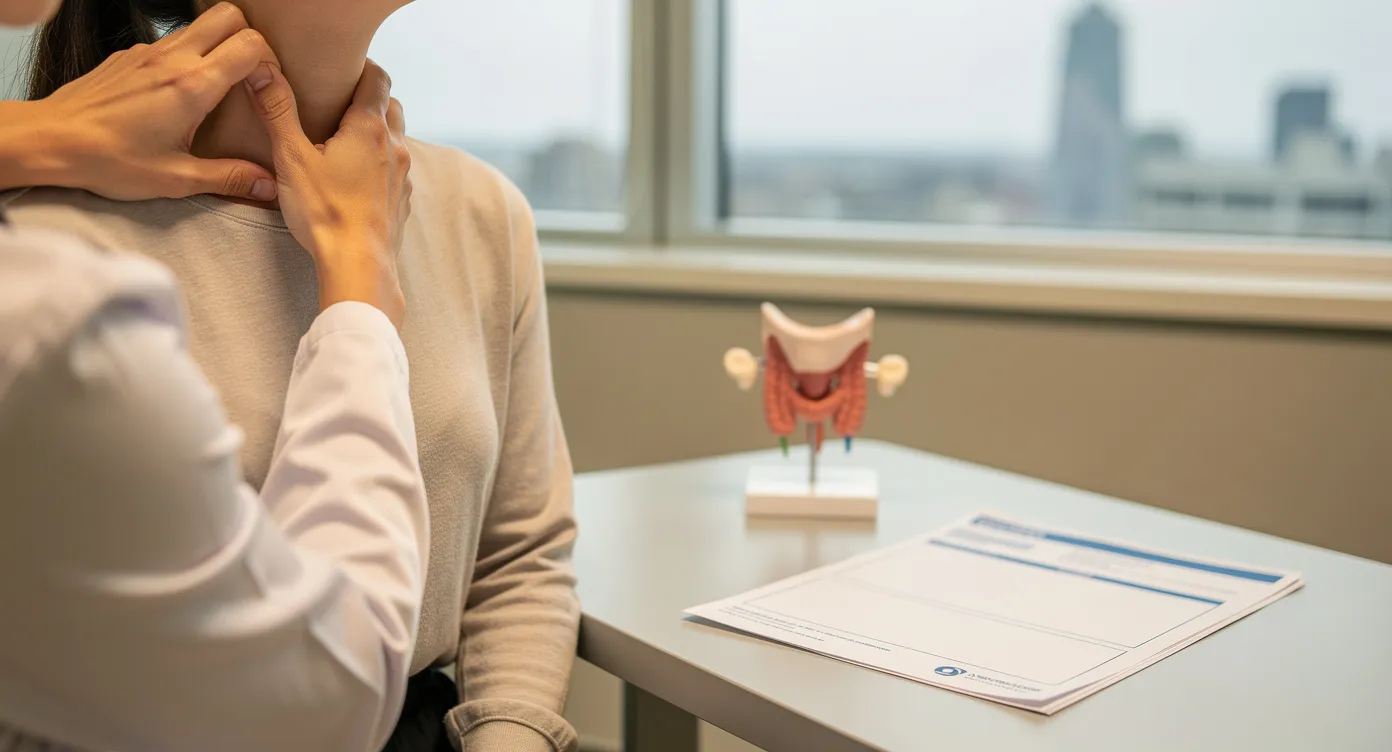
Your thyroid is a small, butterfly-shaped gland at the front of your neck, just below your Adam's apple. It's tiny, but it acts like the thermostat for your entire body. It produces hormones that set the pace of your metabolism, meaning how quickly your cells turn food into energy, how warm you feel, how fast your heart beats, and even how sharp your thinking is. When the thyroid runs low, everything downstream slows with it.
Hypothyroidism, or an underactive thyroid, happens when the gland doesn't make enough of these hormones to keep your body running at its normal speed. The two hormones that matter most are thyroxine, known as T4, and triiodothyronine, known as T3. When their levels drop, your pituitary gland responds by pumping out more thyroid-stimulating hormone, or TSH, essentially shouting at the thyroid to work harder. That's why a high TSH is often the first clue that something is off, and why it's the number your provider looks at first.
The condition is common, and it becomes more common with age. It affects women far more often than men, and the risk climbs after pregnancy and around menopause. The good news is that hypothyroidism is one of the most manageable chronic conditions in medicine. Once it's identified, treatment is straightforward, inexpensive, and effective for the vast majority of people.
Symptoms That Warrant a Thyroid Test
The tricky part about an underactive thyroid is that the symptoms are quiet and easy to blame on something else. Fatigue gets chalked up to a busy schedule. Weight gain gets blamed on getting older. Feeling cold in a Toronto February seems perfectly normal. Individually, none of these raise alarms. Together, and especially when they persist for weeks or months, they form a pattern worth investigating.
The most common thyroid symptoms include persistent fatigue that rest doesn't relieve, unexplained weight gain or difficulty losing weight, and a constant sensitivity to cold when others are comfortable. Many people also notice dry skin, brittle nails, hair thinning, and constipation. The mental symptoms can be just as disruptive. Brain fog, poor concentration, low mood, and a general sense of sluggishness are all hallmarks of low thyroid hormone.
Some signs are more specific and worth flagging to your provider directly. These include a puffy face, a hoarse voice, muscle aches and weakness, heavier or irregular menstrual periods, and a slowed heart rate. If you can feel a lump or swelling at the base of your neck, that deserves prompt evaluation too. No single symptom confirms hypothyroidism, which is exactly why testing matters. The only way to know is to check the numbers in your blood.
"No single symptom confirms hypothyroidism. The only way to know is to check the numbers in your blood."
What Causes an Underactive Thyroid
By far the most common cause of hypothyroidism in Canada is an autoimmune condition called Hashimoto's thyroiditis. In Hashimoto's, your immune system mistakenly attacks the thyroid gland, gradually reducing its ability to produce hormones. It tends to run in families and often develops slowly over years, which is part of why the symptoms creep in so quietly.
Other causes include previous thyroid surgery, radiation treatment to the neck, and certain medications. Thyroid problems can also appear during and after pregnancy, sometimes temporarily and sometimes as a lasting condition. Iodine levels play a role too, though in Canada iodized salt makes true iodine deficiency rare. Occasionally the issue starts higher up, at the pituitary gland, rather than in the thyroid itself, which is one reason a thoughtful assessment looks at the whole picture rather than a single lab value.
Knowing the cause matters because it shapes monitoring and long-term care. An autoimmune cause, for example, is often tracked with an antibody test and may come with a slightly higher chance of other autoimmune conditions down the road. This is the kind of ongoing pattern that fits well within Chronic Disease Management, where the same provider follows your trends over time instead of meeting you cold at each visit.
How Thyroid Testing Works: TSH and the Full Panel
Diagnosing an underactive thyroid starts with a simple blood test, and the star of that test is TSH. Because your pituitary raises TSH when thyroid hormone is low, a high TSH is usually the earliest and most sensitive sign of hypothyroidism. Many providers start with a TSH test alone, then add more detail if the result is abnormal or if your symptoms are strongly suggestive.
What the numbers mean
When TSH comes back high, the next step is often a free T4 measurement, which shows how much active thyroid hormone is actually circulating. A high TSH with a low free T4 confirms overt hypothyroidism. A high TSH with a normal free T4 points to a milder, early form called subclinical hypothyroidism, which sometimes needs treatment and sometimes just needs watching. Your provider may also order thyroid antibodies to check for Hashimoto's, especially if the cause isn't clear.
Reference ranges vary slightly between labs, and the right target for you depends on your age, your symptoms, and whether you're pregnant. This is why interpreting a thyroid panel is about more than glancing at whether a number is flagged high or low. Your provider reads it alongside how you actually feel and your personal risk factors, which is where an unrushed appointment genuinely changes the quality of the assessment.
Care& members can have thyroid blood work drawn on-site at our Yorkville clinic, so there's no separate trip to a lab. Your results flow into the Care& app at app.careand.ca, where you can view them alongside past values and message the same Nurse Practitioner who ordered them.
How Hypothyroidism Is Treated and Monitored
Treatment for an underactive thyroid is refreshingly direct. In most cases it comes down to replacing the hormone your body isn't making enough of, using a synthetic form of T4 called levothyroxine. Taken once a day, usually on an empty stomach, it restores your hormone levels to where they should be. The medication itself isn't a cure for the underlying cause, but it reliably corrects the deficiency, and many people feel meaningfully better within a few weeks of reaching the right dose.
Finding that right dose is a process rather than a single decision. Your provider starts you at a dose based on your weight, age, and thyroid levels, then rechecks your TSH about six to eight weeks later, since it takes that long for levels to settle. Based on the result, the dose is nudged up or down until your numbers and your symptoms line up. Once you're stable, monitoring usually settles into a check every six to twelve months. Dosing is always determined by your provider, never self-adjusted, because too much replacement carries its own risks.
A few practical points make treatment smoother. Levothyroxine is best taken consistently, ideally at the same time each day and separated from calcium, iron, and certain other supplements, which can block absorption. If you take other medications, your provider can help you choose options and timing that won't cause interactions. If you're pregnant, breastfeeding, or planning a pregnancy, check with your provider before starting or changing any thyroid medication, because your dose needs often change during pregnancy and close monitoring becomes especially important. Thyroid conditions in children are managed differently, so a young person with symptoms should be assessed by a provider experienced in pediatric care.
Severe, untreated hypothyroidism can rarely progress to a medical emergency called myxedema coma, marked by extreme confusion or unresponsiveness, a very low body temperature, slowed breathing, and profound weakness. If you or someone you're with shows these signs, call 911 right away. Chest pain, fainting, or a dangerously slow heartbeat also warrant emergency care.
Care& members get unlimited visits to manage ongoing conditions.
See Membership PricingGetting Tested in Toronto Without a Family Doctor
Here's the frustrating part of the story for a lot of Torontonians. You suspect your thyroid, but you don't have a family doctor, or the one you have is booked out for weeks. Ontario's shortage of family physicians is real, and a walk-in clinic often means starting from scratch with a provider who has never seen you and won't see you again. For a condition that hinges on tracking numbers over time, that lack of continuity is a genuine problem.
Care& offers a different path. As a Nurse Practitioner-led Family Practice, Care& can assess your symptoms, order a thyroid panel, and draw the blood right in the clinic at our Yorkville location. Because Care& is a membership model and not covered by OHIP, you're paying for the access and the time, but you get a dedicated provider who knows your history and follows your thyroid trends from one visit to the next. If getting to the clinic is hard on a workday, Virtual Care lets you review results and adjust your plan by phone or video once your bloodwork is done.
Membership runs $450 plus HST per year for unlimited visits, or you can pay $100 per visit if you'd rather not commit up front. For a condition like hypothyroidism that involves an initial workup, a few dose adjustments, and ongoing monitoring, the unlimited option tends to make sense because those follow-up visits add up. You can see exactly what's included on the How It Works page.
When to See Your Nurse Practitioner
If the symptoms in this article sound familiar, especially fatigue paired with weight changes, cold intolerance, and brain fog that have lasted more than a few weeks, it's worth getting your thyroid checked rather than waiting to see if it passes. The same applies if hypothyroidism runs in your family, if you've had thyroid problems before, or if you've recently been pregnant. A single TSH test can settle a lot of uncertainty.
If you have an OHIP family doctor who can see you promptly, that's a perfectly good place to start, and you should use it. The challenge many people run into is timing. When your family doctor is booked out for weeks, or you don't have one at all, an underactive thyroid can sit undiagnosed while you feel worse. That's where Care& fits. A Nurse Practitioner can evaluate your symptoms, order testing, interpret your results, and stay with you through the monitoring phase, all with appointments that start on time and aren't rushed. The continuity matters most for chronic conditions, where seeing the same provider who remembers your last TSH is far more useful than explaining your history to someone new every time.
You don't need a referral and you don't need an existing family doctor to become a Care& member. If you've been putting off getting checked because the system feels like a wall, this is a way through it. Your provider can help you build a monitoring plan through Chronic Disease Management that fits your life and keeps your thyroid levels where they should be.
Frequently Asked Questions
Can hypothyroidism cause weight gain even if I haven't changed my diet?
Yes. Because thyroid hormone sets your metabolic rate, a low level can slow the pace at which you burn energy and cause your body to retain fluid, leading to modest weight gain. The gain is usually a few kilograms rather than a dramatic amount, and it often improves once your levels are treated. If weight is climbing quickly or significantly, that deserves a fuller assessment, since thyroid is rarely the only factor.
Do I need to fast before a TSH or thyroid blood test?
Fasting isn't required for a standard TSH or thyroid panel, and you can usually have the blood drawn at any time of day. That said, if your provider is checking other things at the same time, such as cholesterol or glucose, fasting may be requested for those. It's always best to confirm the specific instructions when your test is ordered.
Is hypothyroidism a lifelong condition?
In most cases, yes, particularly when the cause is autoimmune Hashimoto's thyroiditis, which is the most common reason for an underactive thyroid. The condition is managed rather than cured, usually with a daily hormone replacement that keeps your levels normal. Some cases, such as thyroid inflammation after pregnancy or certain medications, can be temporary, so your provider will confirm whether treatment is likely to be long term.
How long until I feel better after starting treatment?
Many people notice more energy and clearer thinking within a couple of weeks, but reaching your ideal dose can take a few months of testing and small adjustments. Your provider typically rechecks your TSH about six to eight weeks after any dose change, since that's how long levels take to stabilize. Be patient with the process, and report lingering symptoms so your dose can be fine-tuned.
What if my family doctor doesn't have availability for weeks?
Waiting weeks with worsening symptoms is a common frustration in Ontario, and it's exactly the gap Care& is built to fill. Membership includes unlimited in-person, phone, and video visits with the same Nurse Practitioner, so the person who orders your initial thyroid panel is the one who follows your levels and adjusts your treatment over time. For a condition like hypothyroidism that depends on consistent monitoring, that continuity and ready access to your provider make ongoing management far simpler than starting over at a walk-in each time.
Ready to prioritize your health?
Book an appointment with our experienced Nurse Practitioners today.
Book AppointmentOr call us at (647) 951-4770